Welcome to our website! Call Us: +86-18622194621 E-mail: toptac@fancyco.com

Views: 0 Author: Site Editor Publish Time: 2026-07-16 Origin: Site

Is glassine paper the same as baking paper? The definitive answer is no. While both materials share a translucent appearance and offer grease resistance, their manufacturing processes and chemical properties are entirely different. Confusing these two substrates often leads to costly failures. Using uncoated supercalendered paper in an oven results in fire hazards. Conversely, wrapping delicate artwork in chemically coated baking sheets causes irreversible surface damage. This guide deconstructs the manufacturing methods, chemical properties, and performance limits of both materials. Procurement managers, artists, and packaging engineers will learn how to make evidence-based material selections and avoid disastrous substitutions in their daily operations.
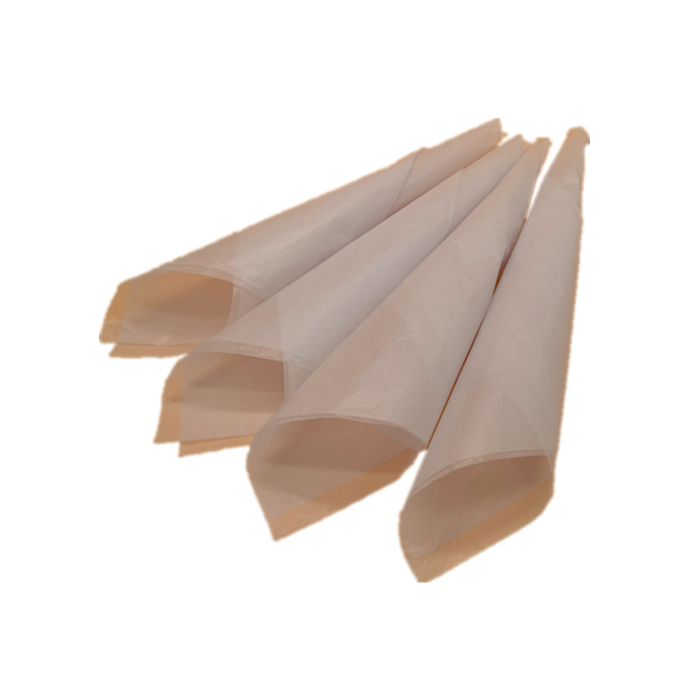
Fundamental Difference: Glassine paper achieves its smooth, grease-resistant finish through mechanical supercalendering, whereas baking paper (parchment) relies on chemical coatings like silicone or Quilon.
Thermal Limitations: Glassine paper is not heat-resistant and will burn in an oven; baking paper is engineered specifically for high-heat culinary environments.
Archival & Artistic Safety: Glassine is naturally acid-free and toothless, making it the industry standard for protecting fine art, whereas the silicone in baking paper can adhere to or degrade acrylics and varnishes over time.
Sustainability Profile: Because it lacks chemical coatings, glassine paper is fully recyclable, compostable, and biodegradable, offering a superior choice for eco-conscious retail packaging.
Table of Contents
Manufacturers produce glassine paper using a strictly mechanical process. They start with standard wood pulp. After pulping and bleaching, the material undergoes a rigorous procedure called supercalendering. The paper web passes through a series of alternating steel and fiber-covered rollers. These rollers apply extreme pressure and heat. This action flattens the cellulose fibers. It aligns them in the same direction. The result is a highly dense material with extremely low porosity. This mechanical compression creates the natural translucency and glossy finish. No chemical additives or synthetic coatings are necessary to achieve this surface.
The machinery used in this process is massive and requires precise calibration. Operators monitor the moisture content of the paper web continuously. If the paper is too dry, it becomes brittle and snaps under the pressure of the steel rollers. If it is too wet, the fibers crush unevenly, ruining the translucent effect. The friction generated by the alternating rollers polishes the surface. This polishing action gives the material its characteristic slip and smoothness. Understanding this mechanical origin is vital. It explains why the paper behaves the way it does in practical applications.
Because the process relies entirely on physical manipulation rather than chemical baths, the resulting paper maintains the natural properties of cellulose. It breathes slightly, allowing trapped moisture to escape. This breathability prevents condensation buildup when wrapping items that might experience temperature fluctuations during transit. The density achieved through supercalendering also provides a physical barrier against airborne particulates. Dust and dirt cannot penetrate the tightly packed fiber matrix.
The high density of the fibers provides natural resistance to grease and moisture. It is important to note that the material is water-resistant, not waterproof. Prolonged exposure to heavy liquids will eventually penetrate the fibers. The mechanical manufacturing process yields a pH-neutral, acid-free product. Its surface is exceptionally smooth and non-abrasive. This toothless texture prevents friction damage on delicate surfaces. Because it contains no synthetic coatings, the paper remains entirely biodegradable. It is 100% curbside recyclable and compostable. This makes it an ideal substrate for sustainable packaging initiatives.
When evaluating material strengths, we look at tensile strength and tear resistance. The aligned fibers give the paper excellent directional strength. It folds cleanly and holds a crease well. This folding memory is highly desirable in packaging operations. Workers can wrap items tightly without the paper springing back or requiring excessive tape. The smooth surface also means that adhesives, when applied correctly, form a strong bond with the paper fibers.
Another inherent strength is its visual appeal. The natural translucency offers a premium unboxing experience. Customers can see a hint of the product inside, building anticipation. This aesthetic quality, combined with its environmental credentials, makes it a top choice for luxury brands moving away from plastics. The material communicates quality and environmental responsibility simultaneously.
Baking paper, often called parchment paper, requires chemical engineering to function. Manufacturers start with a cellulose base. They must apply a chemical barrier to achieve non-stick properties. The two most common coatings are Quilon and silicone. Quilon is a chemical complex containing chromium. It provides a basic non-stick surface and is generally cheaper to produce. However, it is less eco-friendly and typically suitable for single-use applications. Silicone coating represents the premium standard for baking paper. Silicone provides superior heat tolerance. It creates a highly effective non-stick surface that allows for multiple reuses in culinary settings.
The application of these coatings happens during the final stages of paper production. The base paper runs through a bath or a spray system that applies the chemical evenly across the surface. The paper then passes through a curing oven. This heat sets the coating, bonding it to the cellulose fibers. The resulting surface is slick and repels water, grease, and most adhesives. Tape will not stick to high-quality silicone-coated baking paper.
Understanding the chemistry of these coatings helps explain their limitations outside the kitchen. Silicone is a synthetic polymer. It does not break down naturally. When you apply it to paper, you create a composite material. This composite nature is what gives baking paper its incredible utility in the oven, but it is also what makes it problematic for disposal and alternative uses.
The primary function of baking paper is thermal endurance. The chemical coatings allow the paper to withstand high oven temperatures. Most silicone-coated baking papers handle heat up to 420°F to 450°F (215°C to 230°C). The paper will not melt or ignite under normal baking conditions. This heat resistance comes with a significant trade-off. The chemical coating fundamentally compromises the material's recyclability. Recycling facilities cannot easily separate the silicone or Quilon from the paper pulp. Therefore, used baking paper usually ends up in landfills.
In a commercial bakery, this thermal capability is indispensable. Bakers line massive sheet pans with silicone-coated paper. They load these pans with sticky doughs and high-sugar batters. The paper prevents the baked goods from fusing to the metal pans. This saves hours of scrubbing and extends the lifespan of the baking equipment. The non-stick surface ensures that delicate pastries release cleanly, maintaining their shape and visual appeal.
However, this functional capability is strictly limited to heat and release applications. The very properties that make it excel in the oven make it fail in other areas. It cannot be printed on using standard inks. It cannot be recycled easily. It cannot be used for archival storage. Recognizing these functional boundaries prevents costly misapplications across different industries.
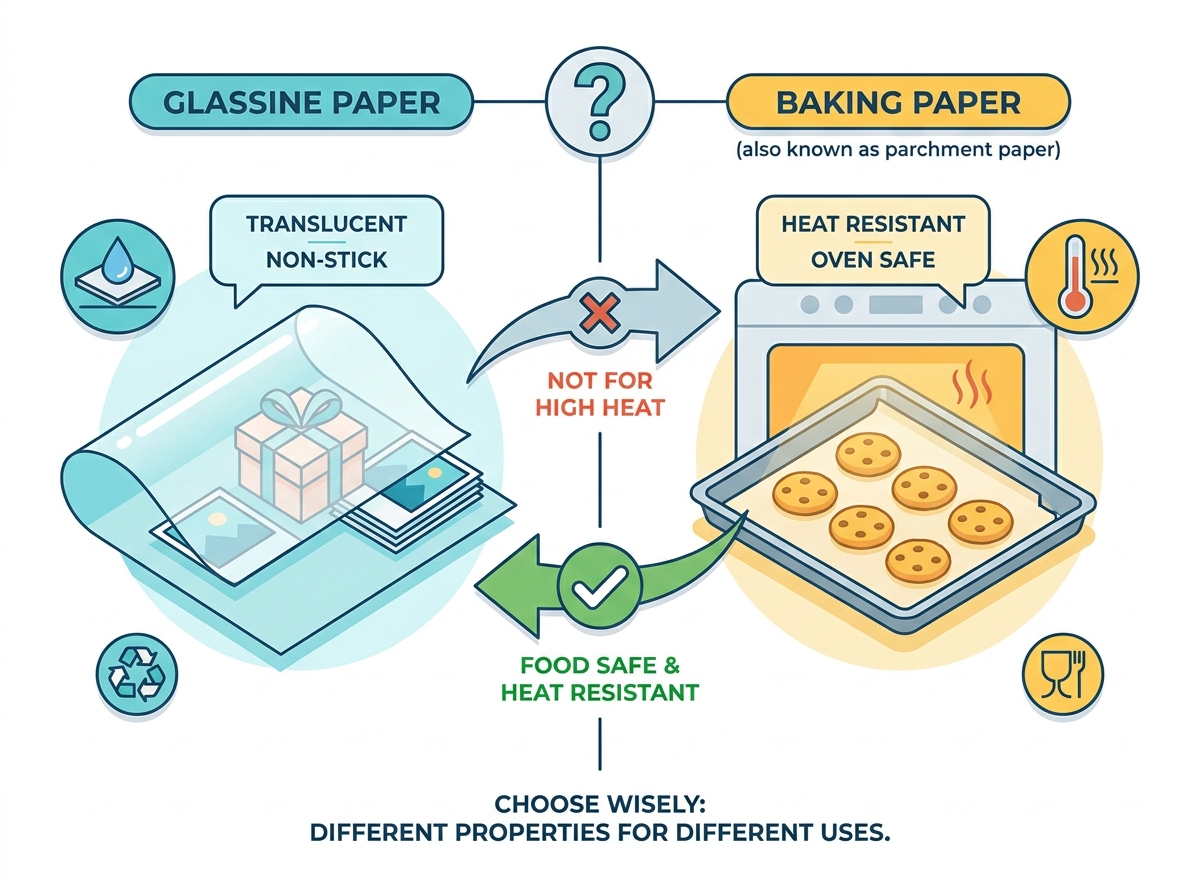
Exposing these materials to high heat yields drastically different outcomes. Baking paper thrives in commercial ovens. It prevents food from sticking to metal pans and withstands sustained high temperatures. In contrast, glassine paper lacks any heat-resistant coating. If placed in an oven, it will scorch, smoke, and eventually catch fire. You must never use it for food preparation involving heat. It is strictly a packaging and storage material. Food manufacturers must strictly separate these materials in their facilities to ensure safety and compliance.
Consider a scenario in a busy commercial kitchen. A new prep cook grabs a roll of uncoated supercalendered paper, mistaking it for parchment. They line a tray of cookies and place it in a 400°F oven. Within minutes, the paper begins to brown and smoke. The edges curl and catch fire. The entire batch of cookies is ruined, and the kitchen faces a serious fire hazard. This highlights the critical importance of material identification.
Conversely, using baking paper for cold storage packaging is a waste of its engineered properties. While it will technically work to wrap a cold sandwich, you are paying for heat resistance you do not need. Furthermore, you are introducing unrecyclable material into the waste stream unnecessarily. Proper material selection aligns the physical properties of the paper with the specific demands of the task.
Long-term storage requires chemically inert materials. Baking paper fails this requirement. The silicone coating on baking paper can migrate over time. If pressed against an acrylic painting or a varnished surface, the silicone may transfer. This causes irreversible dulling, adhesion, and chemical damage. The lack of a silicone coating makes supercalendered paper the only viable option for protecting delicate surfaces. Its acid-free nature prevents yellowing. Its smooth surface eliminates friction. Galleries and archives rely on it to prevent chemical migration and surface abrasion.
When shipping fine art, the wrapping protocol is strict. Art handlers first wrap the canvas in an acid-free, toothless material. They then add layers of bubble wrap or foam for impact protection. If they use baking paper for that first layer, the results can be disastrous. Changes in temperature and humidity during shipping can accelerate the transfer of silicone from the paper to the artwork. Upon arrival, the gallery owner peels back the paper only to find it stuck to the varnish.
The mechanical smoothness of uncoated supercalendered paper prevents this entirely. It glides over the surface of the artwork without catching or leaving residue. It provides a breathable barrier that protects against dust and minor moisture exposure while maintaining the chemical integrity of the piece beneath it. This makes it an indispensable tool for conservators and archivists.
Corporate sustainability goals demand clear end-of-life disposal paths. Baking paper complicates waste streams. Its chemical coatings render it unrecyclable in standard municipal systems. It is a single-use or limited-use consumable that generates landfill waste. Uncoated supercalendered paper aligns perfectly with environmental, social, and governance (ESG) goals. It breaks down naturally. Consumers can place it directly into standard recycling bins. Choosing this material satisfies consumer demand for plastic-free, fully recyclable packaging solutions.
The shift away from single-use plastics has accelerated the adoption of paper-based alternatives. However, not all paper is created equal. Coated papers often end up in landfills because recycling facilities lack the technology to separate the coatings from the pulp. By choosing an uncoated, mechanically finished paper, companies ensure their packaging actually gets recycled.
This environmental advantage extends to composting. Uncoated supercalendered paper will break down in a commercial composting facility. It adds carbon to the compost mix without introducing synthetic chemicals or heavy metals. This closed-loop lifecycle is a powerful selling point for brands targeting environmentally conscious consumers.
People often confuse supercalendered paper with tracing paper. Tracing paper is a common budget substitution, but it lacks structural integrity. Tracing paper is exceptionally thin. It crinkles easily and tears under minimal stress. It does not possess the density required to block moisture or grease effectively. Supercalendered paper offers higher tensile strength and a heavier basis weight. It resists tearing during transit and handling. This durability makes it vastly superior for long-term storage and physical asset protection.
Tracing paper is designed for drafting and overlay work. It is made to be transparent and lightweight. It is not engineered for packaging or protection. If you wrap a heavy object in tracing paper, the corners will punch through the material almost immediately. The paper will shred during handling, leaving the object exposed.
The mechanical compression used to create supercalendered paper gives it a density that tracing paper lacks. This density translates to toughness. It can withstand the friction of being slid into a shipping box. It can handle the pressure of being taped and untaped. It provides a reliable physical barrier that tracing paper simply cannot match.
Procurement decisions often hinge on unit economics. Commercial baking paper is mass-produced for the food industry. It is relatively inexpensive for kitchen use. However, using it outside its intended scope incurs hidden costs. Premium uncoated packaging paper requires a specialized manufacturing process. This makes it slightly more expensive per sheet. Yet, the cost-benefit analysis strongly favors the premium material for packaging. The slight increase in upfront material cost prevents catastrophic damage to high-value goods. Buying in bulk rolls rather than pre-cut sheets can optimize procurement budgets.
When analyzing costs, you must consider the entire lifecycle of the material. If you use cheap tracing paper to wrap a $5,000 painting, and the paper tears, exposing the canvas to damage, the cost of that failure is immense. The few cents saved on the wrapping material result in thousands of dollars in restoration costs or lost sales.
Procurement teams should focus on sourcing the right material for the specific application. Establishing relationships with specialized paper suppliers ensures consistent quality and reliable supply chains. Testing different basis weights and formats can help optimize usage and reduce waste, further improving the overall cost-effectiveness of the material.
Feature | Glassine Paper | Baking Paper (Parchment) |
|---|---|---|
Manufacturing | Mechanical supercalendering | Chemical coating (Silicone/Quilon) |
Heat Resistance | None (Will burn in oven) | High (Up to 450°F) |
Recyclability | 100% Recyclable and compostable | Generally non-recyclable |
Archival Safety | Acid-free, chemically inert | Coating can transfer and damage art |
Primary Use | Packaging, art protection, food wrapping | Oven baking, high-heat food prep |
Artists face specific risks when choosing protective wrappings. Using baking paper on acrylic paintings is a critical error. Acrylic paint remains slightly porous and flexible. Over time, the silicone from baking paper bonds with the paint surface. Removing the paper can pull paint off the canvas. It also leaves a dull, cloudy residue. Budget substitutions like tracing paper fail because they tear during transit. You must use glassine paper for fine art. It is the non-negotiable standard for galleries and art shippers. It protects against dust, moisture, and friction without chemical interference.
The process of wrapping a canvas requires care and the right materials. First, ensure the painting is completely dry and cured. Lay out a sheet of uncoated supercalendered paper large enough to cover the entire face of the canvas with plenty of overlap. Place the canvas face down on the paper. Fold the edges over the back of the stretcher bars and secure them with artist's tape. Never apply tape directly to the canvas.
This method creates a protective envelope. The smooth surface of the paper rests gently against the paint. It prevents dust from settling on the surface and provides a barrier against minor abrasions during handling. For long-term storage, this wrapping method ensures the artwork remains pristine and ready for display or sale.
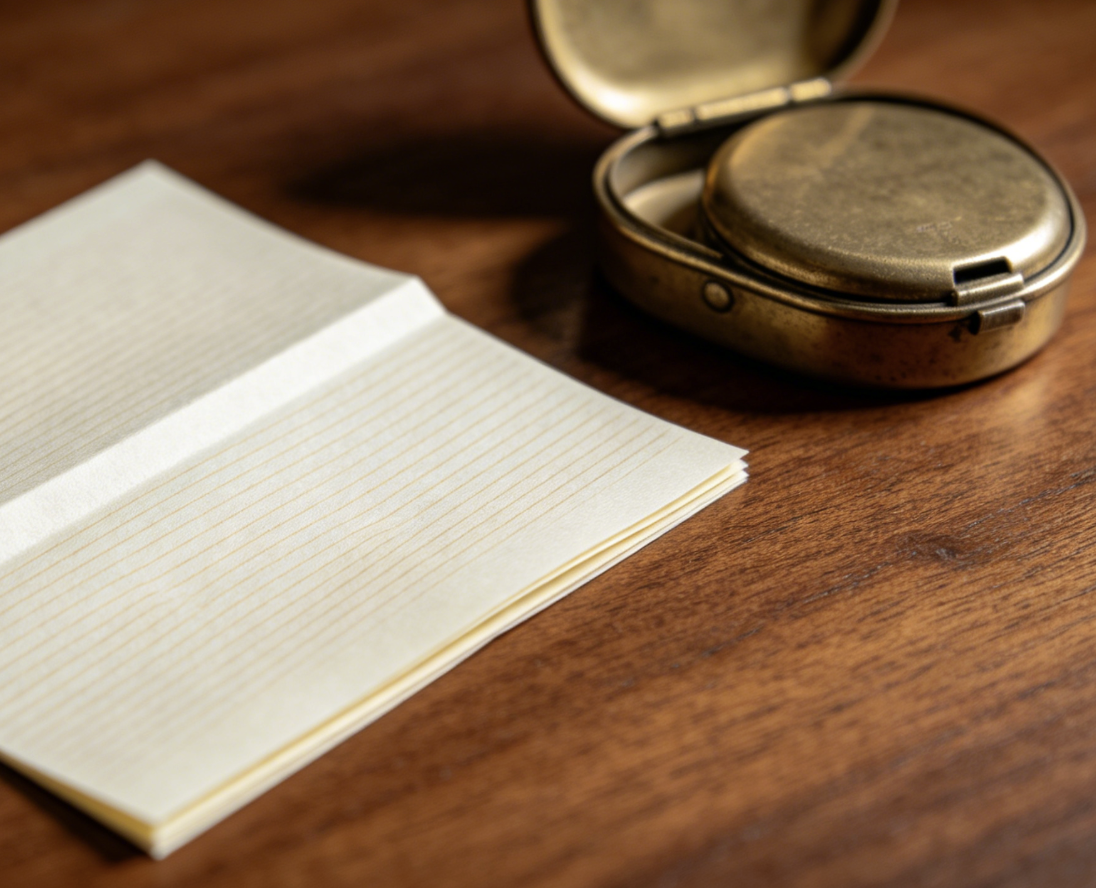
Retailers are actively seeking alternatives to clear plastic poly bags. Uncoated supercalendered paper serves as the premier substitute. It provides enough translucency for barcode scanning and product identification. It protects apparel, cosmetics, and luxury goods from dust and moisture. Furthermore, it supports custom branding. Because it is uncoated, it accepts specific printing inks exceptionally well. You can print logos and handling instructions directly on the packaging. Silicone-coated baking paper repels ink, making it useless for branded retail applications.
Implementing this material in a fulfillment center requires some adjustments. Workers accustomed to sealing plastic bags with heat sealers will need to switch to tape or stickers. However, the folding memory of the paper makes it easy to work with. It holds crisp folds, allowing for neat, professional-looking packages.
The unboxing experience is a critical touchpoint for e-commerce brands. Receiving a product wrapped in crisp, translucent paper feels premium. It communicates that the brand cares about details and the environment. This positive impression can drive customer loyalty and repeat purchases.

The food industry utilizes both materials, but at different stages. You must use baking paper for the actual cooking phase. It lines baking sheets and prevents dough from sticking under high heat. Once the food is cooked and cooled, the material requirements change. Uncoated supercalendered paper excels at post-prep storage. It is excellent for wrapping baked goods, candies, and charcuterie. Its dense fibers block grease from seeping through to the outside of the package. It keeps food fresh while maintaining an attractive, professional presentation.
Consider a bakery selling artisan cookies. They bake the cookies on silicone-coated parchment. Once the cookies cool, they transfer them to individual bags made of uncoated supercalendered paper. These bags resist the butter and oils in the cookies, preventing unsightly grease spots. The translucency allows customers to see the product inside.
This two-material system optimizes both production and presentation. It uses the expensive, heat-resistant material only where necessary and relies on the recyclable, presentation-friendly material for customer-facing packaging. This approach maximizes efficiency and minimizes environmental impact.
Using the wrong paper carries severe financial and reputational risks. Wrapping a high-value painting in baking paper can ruin the artwork entirely. The cost of restoring a damaged canvas far exceeds the savings from using cheaper paper. In commercial kitchens, confusing the two materials leads to melted packaging or oven fires. In retail, using unrecyclable coated paper frustrates eco-conscious consumers. Customer complaints about deceptive packaging claims can damage brand equity. You must quantify the value of using verified, specialized materials to protect your assets and reputation.
A common mistake in small businesses is buying whatever translucent paper is cheapest at the local supply store. This lack of material knowledge leads to unpredictable results. A batch of handmade soaps wrapped in tracing paper might arrive at the customer's door with the packaging torn and the product damaged. The cost of replacing the product and shipping it again wipes out any savings from the cheap paper.
Mitigating these risks requires education and clear procurement guidelines. Train your staff on the differences between the materials. Label storage areas clearly to prevent accidental mix-ups. Establish standard operating procedures that specify exactly which material to use for each task.
Procurement teams must implement strict quality assurance protocols. You must verify material specifications with your suppliers. Use the following criteria to ensure you receive the correct product:
Request explicit acid-free certification for archival applications.
Verify the complete absence of silicone or Quilon coatings.
Check the basis weight (GSM) to ensure adequate structural integrity.
Source materials made from FSC-certified wood pulp to support sustainability goals.
Request physical samples to test ink adhesion and folding memory before bulk ordering.
Do not rely solely on product titles or marketing descriptions. Ask for technical data sheets. These documents provide the exact specifications of the material, including its composition, basis weight, and physical properties. Reviewing these sheets is the only way to guarantee you are getting the right product for your needs.
Conducting in-house testing is also highly recommended. Before committing to a large order, run a small batch of your product through your standard packaging or storage process using the new material. Observe how it performs under real-world conditions. This practical testing identifies potential issues before they become costly problems.
Selecting the right paper depends entirely on your application requirements. While baking paper is the preferred choice for high-temperature food preparation, glassine paper offers significant advantages for packaging, archival protection, retail presentation, and sustainable product wrapping. Understanding the unique properties of each material helps businesses improve product protection, reduce unnecessary costs, and support environmentally responsible packaging strategies.
Working with an experienced paper packaging supplier is equally important for ensuring consistent material quality and reliable packaging performance. TOPTAC specializes in high-quality glassine paper products, customized packaging solutions, and professional technical support, helping global brands, retailers, and manufacturers develop sustainable, durable, and application-specific paper packaging solutions.
Audit your current packaging and storage materials immediately to identify and remove any incorrect substitutions.
Eliminate all chemically coated baking papers from your art storage or retail packaging workflows to prevent chemical migration.
Request uncoated material samples from verified suppliers and review their technical data sheets for acid-free certification.
Test the new samples for your specific use cases, focusing strictly on ink adhesion, fold retention, and grease resistance.
A: No. It lacks heat-resistant coatings. The material will scorch, smoke, or catch fire if exposed to oven temperatures. You must use baking paper for all high-heat culinary applications.
A: Highly discouraged. The silicone or Quilon coating on baking paper can transfer to acrylics, varnishes, or photographs over time. This chemical migration causes irreversible damage to the surface of the artwork.
A: No. It is water-resistant and grease-resistant due to its high fiber density. However, it will eventually absorb moisture if submerged or exposed to heavy liquids for extended periods.
A: It achieves its smooth properties mechanically without chemical coatings. This makes it 100% recyclable and biodegradable. The silicone in parchment paper makes recycling difficult or impossible for standard facilities.
A: Yes. Because it is uncoated, it accepts specific inks very well. This makes it ideal for branded retail packaging. Baking paper repels ink due to its non-stick chemical coating.
A: Glassine is heavier, sturdier, and pH-neutral. It is durable and archival-safe. Tracing paper is much thinner, tears easily, and lacks the structural integrity required for transit or long-term asset protection.
A: The specialized mechanical supercalendering process and rigorous acid-free quality controls increase production costs. Investing in this premium material prevents catastrophic chemical bonding and structural failures that ruin valuable assets.


