Welcome to our website! Call Us: +86-18622194621 E-mail: toptac@fancyco.com


As regulatory pressures and consumer demands drive the shift away from single-use plastics, packaging engineers and procurement teams are forced to identify alternative materials that do not compromise product integrity. Modern supply chains require substrates that can withstand friction, environmental exposure, and automated handling without relying on synthetic polymers. The core challenge lies in balancing essential barrier properties—such as protection against grease, moisture, air, and dust—with strict sustainability mandates, aesthetic requirements, and unit economics.
To solve this, many operations are transitioning to glassine paper as a high-performance, plastic-free substrate. This material offers a unique combination of mechanical strength and environmental compliance. The following sections provide a comprehensive technical evaluation of its manufacturing process, material properties, comparative advantages, and implementation realities to determine if it fits specific commercial or archival use cases.

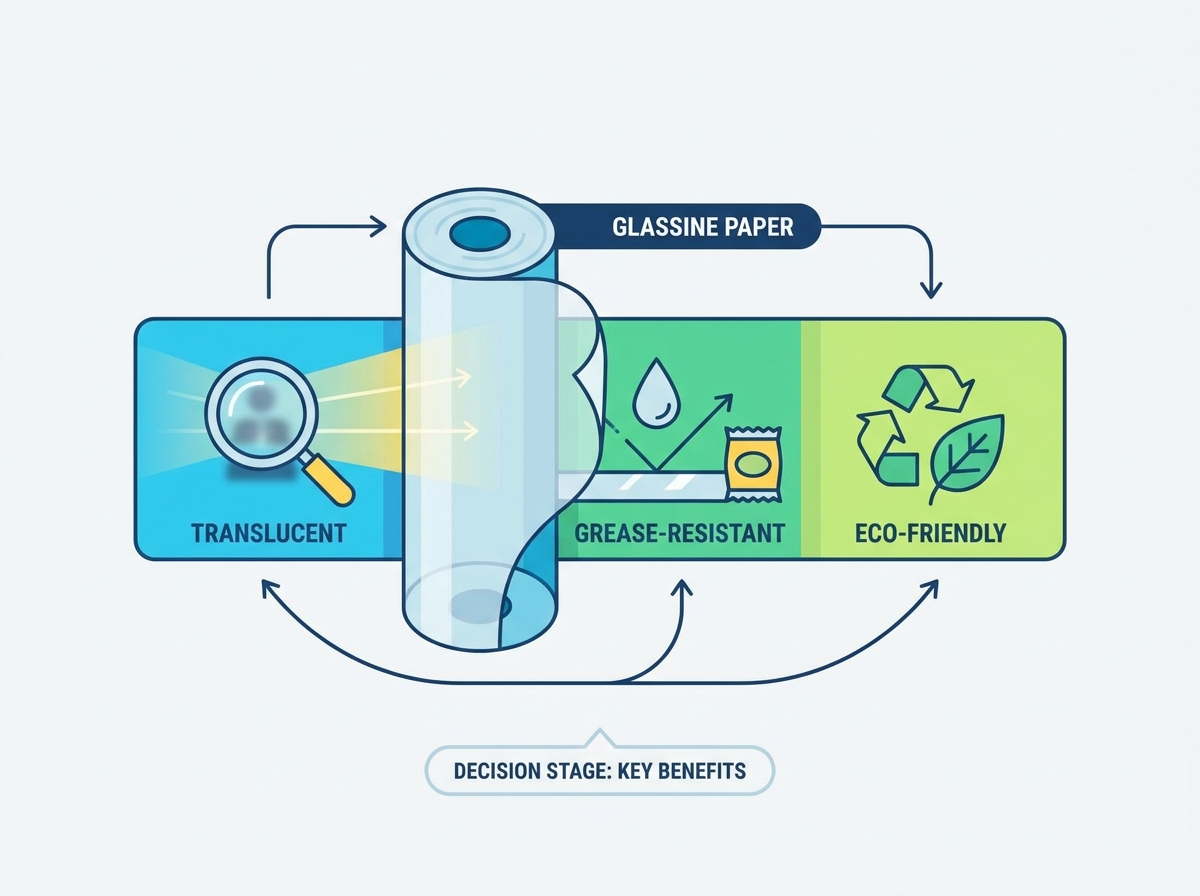
Inherent Barrier Properties: Glassine paper achieves its resistance to grease, air, and moisture through a mechanical process (supercalendering) rather than chemical coatings or synthetic laminates.
High Strength-to-Weight Ratio: Despite its thinness and semi-transparency, the material is highly flexible and resilient, offering unexpected tensile strength and tear resistance.
Archival and Conservation Grade: Manufactured from bleached sulfite wood pulp, high-quality glassine is acid-free and pH neutral, making it a standard for protecting sensitive artwork and documents.
True Sustainability: Because it lacks wax or plastic coatings, uncoated glassine is fully recyclable, biodegradable, and compostable, offering a direct replacement for poly bags in apparel and retail packaging.
Implementation Trade-offs: While highly resistant to moisture and grease, glassine is not entirely waterproof or heat-resistant, requiring careful evaluation against alternative materials like parchment or low-density polyethylene (LDPE).
Table of Contents
Understanding the structural capabilities of this material requires looking at its production cycle. The unique properties of the final product are entirely dependent on specific mechanical and chemical treatments applied during manufacturing. Unlike standard kraft paper, which relies on chemical additives for strength, this substrate achieves its density through intense mechanical processing.
The process begins with the sourcing of bleached sulfite wood pulp. Unlike standard kraft pulping, the sulfite process yields fibers that are highly refined and free of lignin, the natural polymer that causes paper to yellow and degrade over time. Once the pulp is prepared, it undergoes a phase of excessive beating and hydration. Mechanical refiners break down the cellulose fibers, causing them to absorb water and swell. This aggressive beating transforms the pulp into a dense, gelatinous mass. The extensive fibrillation ensures that when the paper web is formed, the fibers bond tightly together, leaving virtually no void spaces.
Wood Chipping and Cooking: Raw timber is chipped and cooked in a sulfite solution to dissolve lignin while preserving cellulose integrity.
Bleaching: The pulp is bleached to achieve a high brightness level, essential for the final translucent appearance.
Refining and Beating: The pulp is subjected to prolonged mechanical beating, increasing fiber hydration and flexibility.
Web Formation: The gelatinous pulp is spread onto a moving wire mesh, where initial water drainage occurs, forming a continuous wet web.
Drying: The web passes through heated cylinders to remove remaining moisture before entering the finishing stage.
After the initial paper web is dried, it enters the critical mechanical step known as supercalendering. The paper passes through a towering stack of alternating steel and fiber-covered cylinders. These supercalenders apply extreme pressure, heat, and friction to the paper web. As the paper is compressed between the hard steel and the slightly yielding fiber rolls, the cellulose fibers are flattened and fused. The friction polishes the surface, while the heat and pressure eliminate any remaining microscopic air pockets within the sheet. Nip pressures can exceed 2,000 pounds per linear inch, and temperatures often reach 250°F, fundamentally altering the paper's physical structure.
This manufacturing sequence is the defining factor in the material's performance. Because the supercalendering aligns the cellulose fibers so tightly, the paper becomes naturally non-porous, translucent, and glossy. It achieves these characteristics without the need for secondary chemical treatments, waxes, or polymer coatings. This mechanical densification directly impacts its recyclability; since it remains a pure cellulose product, it can re-enter standard paper recycling streams easily while still delivering robust barrier performance. Packaging engineers rely on this mechanical density to provide consistent protection without compromising environmental goals.
Evaluating packaging materials requires precise data on how they interact with environmental stressors. Glassine paper offers a specific set of resistances and structural benefits that dictate its end-use applications. Field testing often reveals that its mechanical properties rival those of light-gauge plastics in specific controlled environments.
The dense fiber structure provides distinct barrier limits. It exhibits high efficacy against grease, oils, and dust, preventing lipid migration that would otherwise stain standard paper. Its air and gas barrier properties are also notable; the lack of porosity prevents oxidation, helping to preserve product freshness and aromas in food applications. Regarding moisture resistance, the material is water-resistant and repellent under light contact. Water droplets will bead on the surface temporarily. However, it is not highly waterproof or vapor-proof. Prolonged exposure to liquid water or high humidity will eventually cause the cellulose fibers to swell and degrade.
Barrier Type | Performance Level | Testing Standard (Typical) | Practical Implication |
|---|---|---|---|
Grease & Oil | High | TAPPI T 559 (Kit Test) | Prevents staining from baked goods and lubricated parts. |
Air & Gas | Moderate to High | ASTM D3985 | Reduces oxidation, preserving aromas and freshness. |
Moisture (Liquid) | Low to Moderate | Cobb Test (TAPPI T 441) | Repels light splashes; fails under submersion. |
Dust & Particulate | Excellent | Visual Inspection | Keeps apparel and sensitive components clean during transit. |
Despite its thin profile, the structural integrity of this substrate is substantial. The dense fiber alignment makes it strong but flexible. It resists tearing and puncturing during manual handling and can withstand the tension of high-speed automated packaging machinery. This flexibility allows it to fold sharply and hold creases without splitting, a necessary trait for wrapping rigid or irregularly shaped items. In automated form-fill-seal operations, its low coefficient of friction ensures smooth running without jamming.
For preservation and conservation applications, chemical stability is non-negotiable. High-grade variants are manufactured to be acid-free, lignin-free, and pH-neutral. Lignin causes oxidation and yellowing, while residual acids can migrate to adjacent materials and cause chemical burns or degradation. By eliminating these elements during the sulfite pulping process, the resulting paper provides a chemically inert environment, ensuring long-term protection for sensitive artifacts. Conservators routinely specify this material for interleaving fragile documents and photographs.
The aesthetic and functional implications of its surface finish are distinct. The supercalendering process creates a smooth, toothless surface with a glossy sheen. This non-abrasive texture prevents scratching on delicate items. Furthermore, its semi-transparency offers a significant operational advantage. The high visibility allows warehouse personnel and retail staff to perform easy barcode scanning and product inspection directly through the packaging, eliminating the need to open and potentially damage the inner wrapping. This transparency is achieved purely through mechanical densification, not chemical clarification.
Selecting the right substrate requires comparing it directly against legacy materials. Each alternative has specific strengths and end-of-life implications. Procurement teams must weigh physical performance against environmental impact when making material substitutions.
Polyethylene bags offer absolute waterproofness and high elasticity, making them ideal for heavy liquid exposure. However, they fail on sustainability metrics, often requiring specialized drop-off recycling rather than curbside collection. Glassine provides superior breathability, preventing condensation build-up inside the package, and is inherently static-free, which is crucial when packaging electronics or fine powders. It also offers straightforward curbside recyclability, aligning with modern circular economy goals.
The primary difference lies in how the barrier is achieved. Glassine utilizes a mechanical barrier created through extreme pressure. Wax paper relies on a coated barrier, typically paraffin or soybean wax applied over a standard paper base. This coating significantly impacts end-of-life disposal. Wax paper is generally non-recyclable because the wax cannot be easily separated from the paper fibers during the repulping process, whereas uncoated glassine is fully recyclable. For operations prioritizing zero-waste initiatives, this distinction is critical.
While visually similar, their manufacturing processes differ entirely. Parchment paper is treated with sulfuric acid or coated with silicone to achieve extreme heat resistance and non-stick properties. This makes parchment the superior choice for baking and high-temperature culinary applications. However, these chemical treatments make parchment more expensive and less ideal for simple retail packaging where heat resistance is unnecessary. Parchment's silicone coating also renders it non-recyclable in standard municipal streams.
Cellophane is derived from regenerated cellulose but often incorporates synthetic polymer coatings to improve moisture resistance, complicating its environmental profile. Vellum historically referred to calfskin but now often denotes a plasticized cotton blend used in drafting. Glassine offers better structural integrity for packaging than drafting vellum and provides a more sustainable, purely wood-pulp-based alternative to coated cellophane at a competitive cost per unit. It strikes a practical balance between performance and environmental responsibility.
Material | Primary Barrier Method | Water Resistance | Heat Resistance | Curbside Recyclable |
|---|---|---|---|---|
Glassine | Mechanical (Supercalendering) | Moderate (Water-resistant) | Low | Yes |
LDPE Poly Bags | Synthetic Polymer | High (Waterproof) | Low to Moderate | No (Requires specialized recycling) |
Wax Paper | Chemical (Wax Coating) | Moderate | Low (Wax melts) | No |
Parchment Paper | Chemical (Silicone/Acid treatment) | Moderate | High (Oven safe) | No (Due to silicone coatings) |
The unique physical properties of this paper dictate its use across several distinct industries, solving specific handling and preservation challenges. Field implementation demonstrates its versatility beyond simple wrapping.
Retailers are rapidly adopting glassine bags as inner packaging for apparel, accessories, and cosmetics. The goal is to replace clear poly bags while maintaining operational efficiency. The semi-transparent nature allows for barcode scanning visibility, ensuring inventory management systems function without interruption. It also provides excellent dust protection during warehousing and transit, keeping garments clean without utilizing synthetic plastics. Brands utilizing this material often see an improvement in consumer perception regarding their environmental commitments.

In the food sector, it serves as a reliable grease-resistant wrap for baked goods, fast food, and candy inserts. Because it lacks synthetic coatings, it does not alter the taste of the food. Its air barrier properties play a critical role in aroma and flavor preservation, keeping baked goods fresh. Most uncoated variants comply with FDA and food-grade regulations for direct food contact. Bakeries utilize it for pan liners and pastry bags, relying on its grease holdout to maintain a clean presentation.

Museums and galleries rely on this material for interleaving photographs and protecting charcoal or pastel illustrations. The smooth, non-abrasive, toothless texture ensures that delicate pigments are not smudged or lifted from the canvas. Its acid-free and pH-neutral properties are vital for preserving historical documents, preventing the chemical degradation and yellowing that occurs when artifacts are exposed to acidic environments. Archivists specify it for long-term storage of sensitive negatives and prints.
Industrial applications leverage its specific barrier traits. It is frequently used for sterile barrier pouches and sample envelopes in pharmaceutical settings. In manufacturing, it serves as protective wrapping for lubricated mechanical parts, such as bearings. The dense fiber structure confines the grease to the part, preventing it from leaking into the outer packaging while keeping environmental dust away from the sensitive components. This ensures parts arrive at the assembly line clean and ready for installation.
Integrating a new packaging substrate requires careful evaluation of supply chain variables, storage conditions, and production capabilities. Transitioning from plastics to paper-based alternatives involves specific operational adjustments.
Procurement teams must verify supplier claims to ensure environmental compliance. Look for FSC (Forest Stewardship Council) or PEFC certifications, which guarantee the wood pulp is sourced from responsibly managed forests. Request unbleached options if chemical reduction is a priority. Most importantly, obtain confirmation of zero silicone or poly coatings, as these additives negate the material's curbside recyclability. Requesting material safety data sheets (MSDS) and technical data sheets (TDS) is a standard practice to confirm these specifications.
Address the unit economics early in the sourcing process. Glassine paper can carry a higher upfront cost per unit compared to virgin plastics like LDPE. Additionally, suppliers often require higher minimum order quantities (MOQs) for custom sizes, specific thicknesses, and branded printing. Teams must weigh these upfront costs against the long-term brand value of plastic-free packaging and potential savings from avoided plastic taxes. Evaluating the entire packaging lifecycle often reveals hidden efficiencies that offset initial material costs.
Environmental sensitivities must be factored into warehousing operations. Because it is a cellulose-based product, it reacts to atmospheric moisture. It can warp, curl, or lose its structural integrity if stored in environments with extreme or fluctuating humidity over prolonged periods. Climate-controlled storage is recommended to maintain the paper's flatness and runnability on automated packaging lines. Maintaining a relative humidity of 45-55% at 70°F is generally advised for optimal performance.
Branding this material presents technical challenges. Printing on a non-porous, glossy surface means standard inks will not absorb easily, leading to smudging. It necessitates specific flexographic printing techniques and fast-drying inks. Furthermore, there are limitations on high-fidelity photographic prints; simple vector graphics, logos, and typography yield the best results on this substrate. Working closely with a converter experienced in handling dense, supercalendered papers is essential for achieving high-quality print results.
Glassine paper is the optimal choice for brands prioritizing eco-friendly, plastic-free packaging that requires moderate moisture and high grease resistance, or for archival applications requiring chemical neutrality and visibility. Its mechanical manufacturing process delivers robust barrier properties without compromising its end-of-life recyclability.
Procurement teams should select this material to replace poly bags for indoor or boxed retail items, apparel, and dry foods. However, they should avoid it if the product requires hermetic sealing, extreme heat resistance, or exposure to heavy water elements during transit.
Working with an experienced paper packaging manufacturer is equally important for achieving consistent material quality and reliable packaging performance. TOPTAC specializes in sustainable paper packaging products, customized converting solutions, and professional technical support, helping global brands, retailers, and manufacturers develop environmentally friendly, high-performance packaging solutions tailored to diverse industries.
Order material samples in various thicknesses to evaluate tactile feel and transparency.
Conduct transit and friction testing with actual products to ensure the paper withstands your specific supply chain rigors.
Verify end-of-life certifications and FSC compliance with packaging suppliers before committing to large-scale adoption.
Test barcode scannability through the material using your current warehouse scanning hardware.
A: It is water-resistant, not waterproof. The dense fiber structure repels light moisture and condensation, causing water to bead on the surface temporarily. However, if submerged or exposed to heavy water for prolonged periods, the cellulose fibers will eventually absorb the moisture and degrade.
A: Yes. Uncoated, standard glassine is 100% curbside recyclable, biodegradable, and compostable. Because it is made entirely from wood pulp without synthetic waxes or plastic coatings, it breaks down naturally and can be processed in standard paper recycling facilities.
A: Printing is possible but requires specific inks and processes. Due to its glossy, non-porous surface, standard inks will not absorb and may smudge. Printers typically use flexographic processes with fast-drying or UV-cured inks designed to adhere to smooth substrates.
A: Glassine achieves its grease and moisture resistance mechanically via supercalendering, which tightly compresses the paper fibers. Wax paper relies on a chemical coating, typically paraffin or soybean wax, applied over standard paper. This coating makes wax paper difficult or impossible to recycle.
A: Most variants are FDA-approved for direct food contact. Because it is naturally grease-resistant without the use of chemical coatings, it is ideal for wrapping baked goods and confections. Always verify that the specific product is manufactured in a certified facility without toxic additives.
A: It is highly valued in conservation because it is acid-free and pH-neutral, preventing the chemical degradation of photos and documents. Its smooth, toothless surface prevents smudging, sticking, and abrasion when interleaving delicate charcoal, pastel, or graphite illustrations.
A: Yes. Its semi-transparent properties make it highly effective for scanning retail barcodes directly through the packaging. This allows warehouse and retail staff to manage inventory and process items without needing to open or remove the protective inner wrapping.


