Welcome to our website! Call Us: +86-18622194621 E-mail: toptac@fancyco.com

Views: 0 Author: Site Editor Publish Time: 2026-07-16 Origin: Site

Regulatory shifts and consumer demands to eliminate single-use plastics force packaging engineers and procurement teams to re-evaluate traditional cellulosic materials for high-performance applications. Operations require a packaging substrate providing reliable barrier protection against grease, atmospheric dust, and mechanical friction. You must achieve this without relying on non-recyclable polymer coatings or films. This guide breaks down the mechanical properties, manufacturing realities, and specific industrial purposes of glassine paper. We provide a technical framework to determine if it meets your operational and compliance requirements, focusing on material science, conversion behavior, and field-level implementation strategies.
Manufacturing Distinction: Glassine paper achieves its signature smooth, glossy, and translucent finish through a mechanical process called supercalendering, not through chemical coatings or waxes.
Core Capabilities: It offers high bursting and tensile strength, exceptional folding endurance, and natural resistance to grease and oils, making it viable for food, medical, and archival applications.
Sustainability Profile: Because it is inherently uncoated wood pulp, standard glassine is fully recyclable, biodegradable, and curbside-friendly, serving as a direct replacement for polybags.
Primary Limitations: While highly water-resistant, glassine is not entirely waterproof; it requires specific handling in high-humidity storage environments and presents unique challenges for high-speed commercial printing.
Table of Contents
Manufacturers produce this unique substrate through a mechanical pressing technique called supercalendering. Unlike standard paper production that relies on chemical sizing or surface coatings to achieve specific barrier properties, this process alters the physical structure of the cellulose fibers. The production line starts with highly hydrated wood pulp fibers. The extended beating process fibrillates the cellulose, creating a gel-like consistency that forms a dense web on the paper machine.
Once the base web is formed and dried, it enters the supercalender stack. This equipment consists of alternating steel and fiber-covered cylinders. The web passes through these rollers under extreme heat and pressure. The intense mechanical action flattens the internal capillaries of the pulp, forcing the fibers to align and compress into a nearly solid sheet. The result is a material with high density, low porosity, and natural translucency. It achieves these characteristics entirely without chemical additives or plastic laminates.
The supercalendering process involves several distinct operational phases:
Pulp Hydration: Extended refining of the wood pulp maximizes fiber fibrillation, increasing the surface area for hydrogen bonding.
Web Formation: The highly refined pulp forms a dense, wet web on the Fourdrinier wire, requiring specialized drainage techniques due to the low freeness of the stock.
Initial Drying: Steam-heated cylinders reduce the moisture content to a specific target level, preparing the sheet for the mechanical stress of calendering.
Supercalendering: The sheet passes through the alternating hard and soft nips. The friction, heat, and pressure plasticize the cellulose, collapsing the void spaces and creating the characteristic smooth, glossy finish.
Winding and Slitting: The finished web is wound into master rolls, ready for conversion into sheets, bags, or specialized packaging formats.
Weight-for-weight evaluations demonstrate impressive physical characteristics. Glassine paper delivers higher bursting and tensile strength than standard kraft or tissue papers of identical basis weights. Its structural memory and stiffness remain critical for automated packaging lines. You can rely on it for pocket-forming and structural protective inserts where dimensional stability dictates machine runnability.
From a barrier perspective, the dense fiber network provides excellent resistance to atmospheric gases and dust particulates. It also excels at preventing lipid and grease penetration. The lack of internal void space means oils cannot easily migrate through the sheet via capillary action. This makes it highly effective for applications requiring a clean, grease-free exterior.
Property | Glassine (30 gsm) | Standard Kraft (30 gsm) | Tissue Paper (15 gsm) |
|---|---|---|---|
Density | High (approx. 1.0 - 1.2 g/cm³) | Medium (approx. 0.6 - 0.8 g/cm³) | Low (approx. 0.2 - 0.3 g/cm³) |
Porosity (Gurley) | Very High (>10,000 seconds) | Low (10 - 50 seconds) | Very Low (<5 seconds) |
Grease Resistance | Excellent (Natural barrier) | Poor (Requires coating) | None |
Translucency | High | Opaque | Semi-translucent |
Surface Smoothness | Very High (Glossy) | Rough (Matte) | Textured |
Food manufacturers utilize it as an FDA-compliant barrier for baked goods and confectionery wrappers. It serves frequently as the interior packaging for breakfast cereals to prevent grease migration. Success depends on preventing oil migration and preserving product freshness. The material maintains a fully recyclable end-of-life profile, aligning with modern waste reduction mandates.
In bakery applications, the substrate prevents butter and shortening from staining the outer packaging, maintaining brand presentation. For confectionery, it provides a non-stick surface for candies and chocolates, ensuring easy release without leaving paper residue on the product. The natural grease resistance eliminates the need for fluorochemical treatments, simplifying regulatory compliance.

Medical facilities deploy it in sterile environments. Applications include surgical gown linings, medical device wrapping, and pharmaceutical sealing. Success criteria involve maintaining a sterile barrier and resisting particulate shedding. The substrate must withstand specific gas or autoclave sterilization protocols without compromising its structural integrity.
The low porosity of the supercalendered sheet prevents the ingress of bacteria and other contaminants, maintaining the sterility of enclosed instruments. Its smooth surface minimizes the generation of lint and particulates, a critical requirement in cleanroom environments and surgical settings. Furthermore, the material allows for the penetration of sterilizing gases like ethylene oxide while maintaining a robust barrier post-sterilization.
Conservators use it as a pH-neutral, acid-free interleaving paper. It protects illustrations, photographs, historical documents, postage stamps, and numismatic items. It prevents chemical degradation and mechanical friction. Success requires certified neutral pH levels and a non-abrasive surface texture. It must prevent ink, pigment, or moisture transfer between facing pages or stacked assets.
When storing delicate photographs or charcoal drawings, the smooth surface prevents scratching and abrasion. The low porosity stops the migration of residual processing chemicals or acidic compounds from adjacent materials. For philatelists, it provides a safe, transparent enclosure that allows for inspection without direct handling, protecting fragile perforations and original gum.

Retailers adopt it as an inner wrapping material and protective pocket. It serves as a direct replacement for clear polyethylene bags in garment and luxury goods shipping. Success criteria include enhancing unboxing aesthetics and protecting against transit dust. It helps brands meet strict corporate environmental targets by eliminating problematic flexible plastics from the supply chain.
The material provides sufficient translucency for barcode scanning and product identification in fulfillment centers. It protects garments from dust and minor abrasions during transit. Unlike polybags, which often end up in landfills due to limited recycling infrastructure, this cellulosic alternative can be processed in standard curbside paper recycling streams.
Manufacturers utilize it as the foundational substrate for pressure-sensitive adhesive labels, tapes, and decals. It offers uniform thickness, flatness, and compatibility with silicone release coatings. Success relies on smooth die-cutting performance. It must support high-speed automated dispensing capability and dimensional stability under varying tension levels.
The high density prevents the silicone coating from penetrating the sheet, ensuring a uniform release surface. The consistent caliper allows for precise die-cutting of labels without cutting through the liner. Its tensile strength withstands the tension of high-speed label applicators, preventing web breaks and minimizing production downtime.
Material | Key Features | Primary Trade-offs |
|---|---|---|
Glassine Paper | Uncoated, translucent, grease-resistant, curbside recyclable. | Lower extreme-heat resistance; not entirely waterproof. |
Wax Paper & Parchment | Paraffin/soy coatings or silicone treatments for heat/moisture. | Coatings negatively affect recyclability. |
Polyethylene Films | Absolute moisture and vapor barriers. | Non-biodegradable; poor curbside recyclability. |
Standard Tissue Paper | Soft, flexible void fill. | Lacks structural stiffness, tear resistance, and lipid barrier. |
Glassine paper is uncoated and translucent. Wax paper utilizes paraffin or soy coatings that affect recyclability. Parchment is treated with sulfuric acid or silicone for extreme temperature resistance. Glassine offers superior curbside recyclability. However, it provides lower extreme-heat resistance compared to silicone-treated parchment.
When selecting between these options, consider the end-of-life requirements. If the packaging must enter the standard paper recycling stream, uncoated supercalendered sheets provide the best compliance. If the application involves baking or exposure to high oven temperatures, silicone-treated parchment remains necessary despite its recycling limitations.
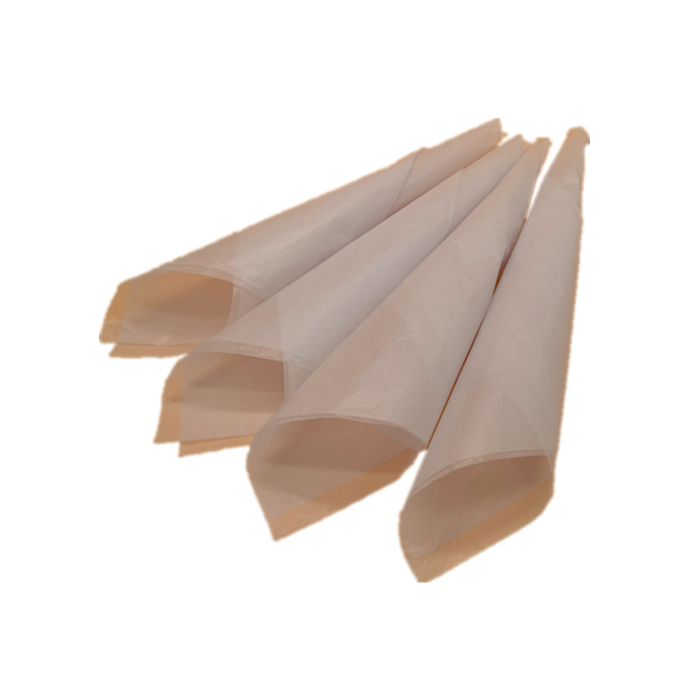
Poly films offer absolute moisture and vapor barriers. Glassine offers breathability, grease resistance, and dust protection. You sacrifice absolute waterproofing when choosing cellulosic materials. In return, you gain a fully curbside recyclable and biodegradable footprint.
The transition from poly films requires careful evaluation of the supply chain environment. If products face prolonged exposure to rain or high humidity during transit, secondary protective measures may be necessary. However, for most apparel and dry goods shipping, the breathability of the cellulosic option prevents condensation buildup, offering a distinct advantage over impermeable plastics.
Glassine provides structural stiffness, high density, and lipid barrier protection. Tissue provides soft, flexible void fill but lacks strength and tear resistance. Glassine is heavier and prevents oil transfer and scratching far more effectively.
Tissue paper serves well for lightweight void fill and basic surface protection. However, it fails in applications requiring automated handling or resistance to grease. The supercalendered alternative provides the necessary rigidity for machine feeding and the barrier properties required for food and industrial components.
Verify Forest Stewardship Council or Sustainable Forestry Initiative certifications during vendor selection. Assess the impact of custom dyes or post-manufacture coatings. These additions can alter the paper's baseline compostability and recyclability. Ensure suppliers provide documentation confirming the absence of per- and polyfluoroalkyl substances (PFAS), especially for food contact applications.
When specifying colored variants, confirm that the dyes used do not compromise the material's repulpability. Heavy ink coverage or specialized functional coatings can interfere with the recycling process, negating the primary environmental benefit of selecting a cellulosic substrate.
The low porosity and high gloss of supercalendered surfaces resist standard water-based inks. This leads to smearing, transfer, or extended drying times. Mitigate this by specifying flexographic printing with fast-drying, specialized UV-curable or solvent inks. Alternatively, utilize custom mechanical embossing techniques instead of traditional printing.
To ensure successful printing, implement the following strategies:
Ink Selection: Work with ink suppliers to formulate fast-drying, high-adhesion inks specifically designed for non-porous substrates.
Surface Treatment: Consider inline corona treatment to increase the surface energy of the sheet, improving ink wet-out and adhesion.
Drying Systems: Ensure printing presses are equipped with adequate UV curing lamps or forced-air drying tunnels to set the ink before rewinding.
Design Adjustments: Minimize heavy ink coverage and large solid areas, opting for line art and lighter ink densities to reduce drying challenges.
Raw rolls and sheets are sensitive to extreme humidity fluctuations. Poor storage causes curling, wavy edges, or dimensional instability before conversion. Implement climate-controlled warehousing for raw material storage. Conduct runnability tests on automated packaging machinery prior to bulk purchasing.
Cellulose fibers naturally absorb and release moisture based on the surrounding environment. Because the supercalendered sheet is highly dense, moisture absorption occurs unevenly, leading to physical distortion. Maintain storage environments between 45% and 55% relative humidity and temperatures around 70°F. Allow master rolls to acclimatize to the conversion room environment for at least 48 hours before processing to ensure dimensional stability during die-cutting or printing.
Glassine paper has become a preferred packaging material for businesses seeking a balance between product protection, sustainability, and operational efficiency. By understanding its manufacturing process, material properties, and application requirements, companies can select the most suitable glassine paper solution for food packaging, retail, medical, archival, and industrial uses while supporting environmentally responsible packaging strategies.
Working with an experienced paper packaging supplier is equally important for ensuring consistent material quality and long-term packaging performance. TOPTAC specializes in high-quality glassine paper products, customized paper packaging solutions, and professional technical support, helping global brands, retailers, and manufacturers develop sustainable, reliable, and application-specific packaging solutions.
Request material data sheets from suppliers to verify basis weight, burst strength, and FDA compliance for your specific application.
Acquire sample rolls and conduct runnability tests on your automated packaging lines to assess feeding, folding, and sealing performance.
Verify ink compatibility and drying times with your current printing partners before committing to large-scale branded runs.
Implement climate-controlled storage protocols in your warehousing facilities to prevent dimensional instability and curling prior to conversion.
A: No. While it is highly water-resistant and protects against moisture vapor and minor spills, it is not entirely waterproof and will degrade if submerged.
A: Yes. Because it is made entirely from supercalendered wood pulp without plastic or wax coatings, standard glassine is 100% recyclable and biodegradable.
A: Glassine is produced via supercalendering for a glossy, grease-resistant finish. Modern vellum is typically made with plasticized cotton or synthetic wood fibers, resulting in a slightly rougher texture used primarily for drafting, invitation overlays, and crafts.
A: Yes, but it requires specialized inks and printing processes like flexography. Its dense, non-porous surface does not absorb standard inks easily.
A: Most high-quality variants manufactured for archival, art, philately, and interleaving purposes are acid-free and pH-neutral. Buyers must explicitly verify this specification with the manufacturer to ensure no residual acidity remains from the pulping process.
A: Its exceptionally smooth, non-abrasive surface prevents friction damage. Its low porosity stops the transfer of oils, inks, or moisture between stacked prints, photographs, stamps, or historical documents.


