Welcome to our website! Call Us: +86-18622194621 E-mail: toptac@fancyco.com

Views: 0 Author: Site Editor Publish Time: 2026-03-20 Origin: Site
Aspect | Impact |
|---|---|
Rigid paperboard and fiberboard keep cigarettes safe from water and harm. | |
Branding | Special designs and colors make custom packs look nice and show good quality. |
Sustainability | Recyclable materials in packaging meet today’s needs for eco-friendly options. |
TOPTAC has many kinds of cigarette papers and packaging materials for your custom pack needs.
Pick the best packaging material to keep cigarettes fresh and safe. This helps make the product better and keeps customers happy.
Use eco-friendly materials to get buyers who care about the environment. Green choices can make your brand look better.
Know the difference between primary and secondary packaging. Each one has a special job to protect and show off your product.
Think about local rules when you pick box sizes and materials. Following the rules keeps people safe and makes customers trust you.
Try new materials and designs to be different in the market. Special packaging can help people remember and like your brand.

Cigarette paper wraps the tobacco. It controls how fast the cigarette burns. This paper keeps each cigarette looking the same. Good sticking makes the cigarette look neat. It also helps with quality. How thick, rough, or porous the paper is changes how it feels and burns. Factories use special machines to make sure every sheet is good.
Tipping paper goes around the filter. It joins the filter to the tobacco part. This paper keeps the filter safe and easy to hold. Tiny holes in the paper let air in. This changes how hard you have to puff and how it feels to smoke. Brands use different colors and designs to get noticed.
Plug wrapping paper holds the filter together. It helps make the filter strong and even. Machines can work faster with this paper. The filter stays firm and does not fall apart.
BOPP tear tape helps you open the pack fast. It sticks well and works in hot or cold places. You can pick the width, color, and printing for your brand. Tiny holes or weak lines make it easy to tear.
BOPP film covers the outside of the pack. It keeps water and dirt away from the cigarettes. The film is clear and shiny, so the pack looks nice. It does not rip easily and blocks sunlight. This keeps the pack fresh and looking good.
Aluminum foil paper lines the inside of the pack. It stops water, air, and light from getting in. This keeps the cigarettes fresh and keeps the smell in. The foil can bend and be printed on for branding.
Coated paper makes the pack stronger and better looking. Layers help keep the cigarettes fresh. You see coated paper used for logos and extra safety.
White cardboard makes the box. It keeps the cigarettes safe from water and being crushed. Printing, logos, and shiny finishes help brands stand out. Strong cardboard makes people trust the pack.
The filter rod shapes the filter. It helps clean the smoke and keeps each filter the same. Most filter rods are made from cellulose acetate tow.
Acetate tow catches bad stuff and tar. Its special shape helps make smoking cleaner.
Triacetin is used when making filter rods. It helps stick the fibers together and makes the filter work better.
You can count on TOPTAC for good cigarette packaging materials. They meet industry rules and help your brand.
There are two main types of cigarette packaging. Primary packaging touches the cigarette. Secondary packaging goes around the pack. It helps with storage and makes the pack look good. Each type uses special materials to keep cigarettes safe and easy to use.
Direct Contact with Product | Functionality | Material Usage | |
|---|---|---|---|
Primary Packaging | Yes | Keeps cigarettes safe and fresh; easy to use | Uses paper, foil, or plastic to stop damage and germs. |
Secondary Packaging | No | Makes packs easy to carry and store; helps brands | Uses cardboard, BOPP film, and tear tape for packing and custom designs. |
Primary packaging is inside every cigarette pack. Cigarette paper wraps the tobacco. Tipping paper covers the filter and joins it to the tobacco. Aluminum foil lines the inside of the pack. These materials keep cigarettes fresh and safe. They also make smoking easier. TOPTAC has cigarette paper that burns evenly. Their tipping paper can show your brand. Aluminum foil keeps out water and locks in smell.
Cigarette paper: Wraps tobacco, controls burn, keeps cigarettes the same.
Tipping paper: Covers filter, connects parts, helps with branding.
Aluminum foil: Blocks water, keeps freshness, makes it shiny.
Primary packaging keeps cigarettes safe and gives you a good product.
Secondary packaging covers the outside of the pack. BOPP film wraps the box and keeps water away. Tear tape lets you open the pack fast. White cardboard makes the box strong. These materials help with storage and moving packs. They also let brands use custom designs to stand out. TOPTAC has shiny BOPP film and tear tape that works well.
BOPP film: Wraps the pack, blocks water, adds shine.
Tear tape: Makes opening easy, helps pack fast.
White cardboard: Builds the box, protects cigarettes, shows the brand.
Secondary packaging keeps the pack safe and helps brands get noticed.
Cigarette boxes come in many sizes around the world. Each place has its own king size box. The table below shows the most common sizes:
Region | |
|---|---|
USA/Canada | 3.63 x 2.83 x 0.83 |
Europe | 3.35 x 2.17 x 0.87 |
Australia | 3.39 x 2.4 x 0.8 |
Asia | 3.5 x 1.675 x 0.7 |
Some markets also have slim and 100’s cigarette box sizes. The 200’s box size is for cartons. These sizes help you pick the best packaging for your product.
You need to think about a few things when picking a box size. The box must fit the type of cigarette. King size boxes fit most cigarettes. Slim boxes are for slim cigarettes. You must follow state rules and health warnings. Taxes and prices can change the box size. Custom branding and printing also matter. Make sure your packaging follows all the rules.
State rules
Health warnings
Taxes and prices
Cigarette size and length
Branding needs
Printing and coating choices
Using standard box sizes makes factories work faster. Filling and sealing go quicker. Less material gets wasted. Same-size cartons are easy to stack and move.
You should know how to pick the best box for your brand. The material you use affects safety and looks. Hard boxes protect better and look fancy. Slim cases fit in pockets and are liked by city people. Recyclable materials help with eco-friendly branding. Good material keeps cigarettes fresh and strong. Test if the box can handle crushing and if seams hold tight. Some places need child-resistant boxes.
Material Type | Pros | Cons |
|---|---|---|
Hard Boxes (Flip-Top) | Strong, protects well, looks fancy | Costs more, heavier to ship |
Slim & Compact Cases | Easy to carry, liked in cities | Less room for warnings, may not fit all cigarettes |
Recyclable and Eco-Friendly | Good for green branding, meets eco goals | May not protect as well, can cost more at first |
Box quality and size change how you ship and store them. Small boxes use less material and cost less to send. Right-sizing saves space and board. Picking the right material makes buyers like your brand more. Eco-friendly boxes attract people who care about the planet. A good box design adds value to your brand.
Tip: Always check local laws before making your cigarette box. This keeps your product safe and helps customers trust you.
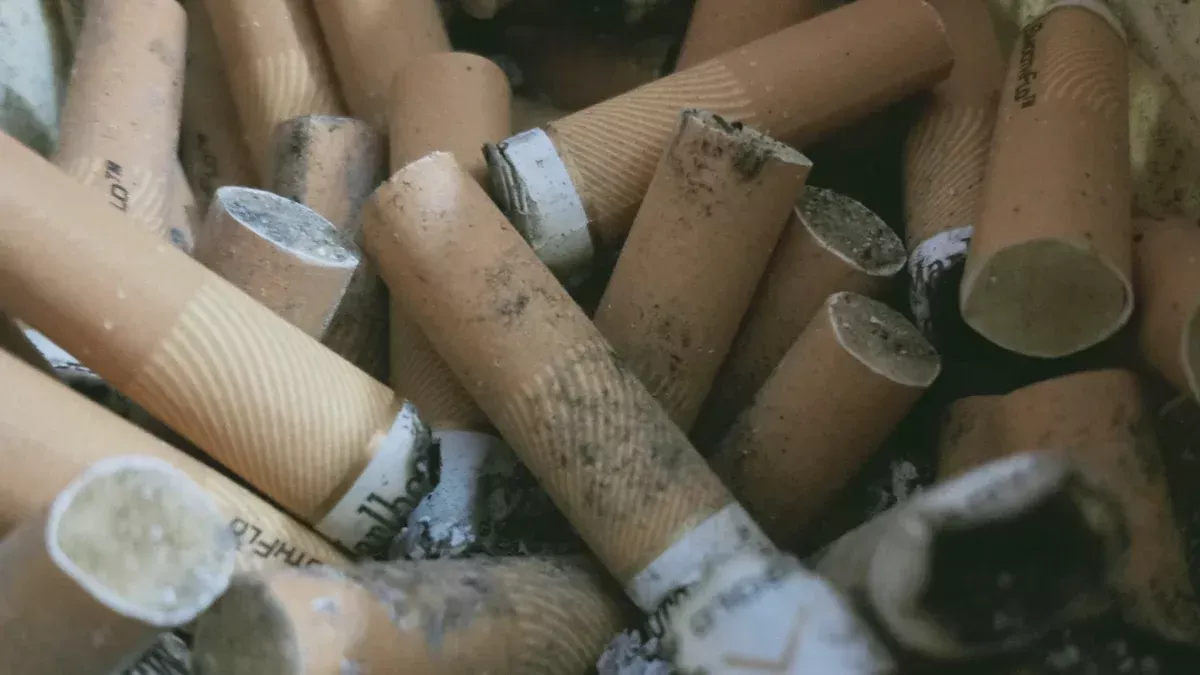
Cigarette packaging is changing to help the planet. Many companies use recyclable materials and lighter packs to make less trash. Some cigarette packs use one type of material and special coatings. This makes recycling easier and lowers pollution from making the packs. Lighter packs use less energy and make less air pollution.
Packs now smell better and use safer chemicals. You get packs that do not stink or have bad additives.
Digital tracking shows where the material comes from. You can trust the supply chain is open and honest.
Old cigarette filters made from cellulose acetate took a long time to break down. Now, some filters are made from polylactic acid. These new filters break down in soil in about three months. They come from plants and make less carbon. Using these filters helps stop microplastic pollution and lowers fire risk.
Key Factors | Cellulose Acetate (CA) | Polylactic Acid (PLA) | Strategic Advantage |
|---|---|---|---|
Biodegradability | 10–15 Years | Rapid Waste Turnover | |
Eco-Compliance | Single-Use Plastic Ban | Fully Compliant | Future-Proof Regulatory Status |
Durability | High | Comparable | No Compromise on Shelf Life |
Eco-friendly packaging has many good points. You help the earth, save money by buying in bulk, and make your brand look better.
Benefit | Description |
|---|---|
Using recycled paper and Kraft makes less trash and lowers carbon. | |
Cost-Effectiveness | Buying in bulk and better supply chains make eco packs cheaper. |
Enhanced Brand Perception | Green choices bring in customers who care about the planet. |
Choosing green cigarette packaging helps the earth and your business.
You want your cigarettes to stay fresh and safe. Special barrier coatings keep out water and air. New paper uses coatings and treatments to keep cigarettes fresh longer. Security printing makes it hard for others to copy your pack. This protects your brand and your buyers.
TOPTAC gives you smart packaging ideas. Their team uses new technology to make strong and safe materials. You get packs that are good for the planet and work well. You can pick how your pack looks to help your brand stand out.
Using advanced materials for your cigarette packs is a smart move. You keep your product safe and show you care about quality.
Cigarette packaging uses different materials for each step. Primary packaging keeps cigarettes safe and fresh. Secondary packaging helps store packs and shows the brand. Tertiary packaging uses strong stuff for safe shipping. You need to pick the right size and material. This helps follow health rules and makes the product better. It also supports being eco-friendly. Eco-friendly packaging builds trust and attracts buyers who care about the earth. TOPTAC offers advanced manufacturing, custom choices, and strict quality checks for your cigarette packaging.
The right size and material make your cigarette stand out.
Eco-friendly choices cut waste and help your brand look good.
Advantage | Description |
|---|---|
Integrated Supply Chain | You control costs and quality all the way through. |
Advanced Manufacturing | You get steady production and custom paper features. |
R&D and Customization | You can make and grow new packaging ideas fast. |
Rigorous Quality Control | You make sure every pack is safe and follows the rules. |
You often see a cigarette box with a size of about 3.63 x 2.83 x 0.83 inches. This size fits most cigarette brands. Some markets use slim or 100’s boxes, but the standard size works best for regular cigarette packaging.
Cigarette size affects how you choose the box. A king size cigarette needs a bigger box. Slim cigarettes fit in smaller boxes. The right size keeps cigarettes safe and fresh. Always match the box size to the cigarette for the best protection.
You should look at the cigarette size, how strong you want the box, and your brand style. The right material keeps cigarettes safe and fresh. Good packaging also helps your brand stand out on the shelf.
You can recycle many types of cigarette packaging. Cardboard boxes and some films are easy to recycle. Always check the recycling rules in your area. Using the right size and material helps make recycling easier.
Yes, the size of the cigarette box changes how many boxes you can ship at once. Smaller size boxes save space and lower shipping costs. Always pick the best size for your cigarette to help with storage and transport.


