Welcome to our website! Call Us: +86-18622194621 E-mail:
toptac@fancyco.com

Views: 0 Author: Site Editor Publish Time: 2026-09-15 Origin: Site
What prevents a lithium-ion battery from short-circuiting? The answer is often an ultra-thin separator film that keeps the electrodes apart while allowing ions to flow.
As batteries become more energy-dense, separator films must be thinner without sacrificing strength, thermal stability, or safety.
This guide explains wet and dry processes, coating technologies, porosity, and mechanical strength to help you select the right battery separator film.
Production Method Dictates Performance: The choice between dry (melt extrusion) and wet (phase inversion) processes fundamentally alters the pore structure, mechanical strength, and thermal stability of the base polyolefin separator films.
Coatings are Non-Negotiable for High-Density Cells: Ceramic and polymeric coatings are increasingly mandatory to mitigate thermal shrinkage and improve puncture resistance in modern EV and high-capacity applications.
Thickness vs. Safety Trade-off: Reducing film thickness increases energy density and lowers internal resistance but exponentially increases the risk of manufacturing defects and dendritic shorting.
Rigorous Quality Control is Essential: Consistent porosity, uniform thickness, verifiable quality claims, and predictable thermal shutdown temperatures are the primary indicators of a reliable separator film supplier.
Table of Contents
A viable separator must meet strict baseline requirements before it ever reaches a winding machine. If a film fails even one of these criteria, the entire cell becomes a safety hazard. We evaluate base films against four primary functional pillars.
Electronic Insulation: The film must completely block electron flow between the anode and cathode. Any electron leakage causes self-discharge and localized heating.
Ionic Conductivity: The material must allow lithium ions to travel freely during charge and discharge cycles. High ionic resistance directly limits the power output and fast-charging capability of the cell.
Chemical Resistance: The polymer matrix must survive prolonged exposure to highly reactive liquid electrolytes, including aggressive carbonate solvents like ethylene carbonate (EC) and dimethyl carbonate (DMC), without degrading over a ten-year lifespan.
Mechanical Durability: The material must withstand high-tension winding, stacking, and calendering during cell assembly. It cannot stretch, tear, or deform under the mechanical stress of automated production lines.
Separators physically isolate the anode and cathode. They prevent direct contact that causes immediate, hard short circuits. Beyond basic physical separation, we rely on a built-in shutdown mechanism for thermal safety. When internal cell temperatures rise dangerously due to overcharging or external abuse, the polymer structure reacts. Pores close at specific temperatures, typically around 130°C for polyethylene and 165°C for polypropylene. This physical transformation melts the polymer just enough to collapse the micropores, halting ionic flow entirely. It stops the electrochemical reaction before the cell reaches the critical threshold for catastrophic thermal runaway.
The internal structure of the film dictates its electrochemical performance. It requires a highly tortuous pore structure. This complex, winding pathway allows lithium ions to pass efficiently while suspended in the liquid electrolyte. Simultaneously, this tortuosity resists the growth of lithium dendrites. Dendrites are rigid, metallic microstructures that form on the graphite anode during rapid charging or low-temperature operation. They can pierce thin films and cause severe internal shorts. A well-engineered, highly tortuous pore structure forces dendrites to navigate a microscopic maze, significantly slowing their penetration and extending the safe operational life of the battery.
The separator must rapidly absorb the liquid electrolyte during the filling stage of manufacturing. Fast wetting speeds up the production process and ensures uniform electrolyte distribution. It must also retain this liquid over thousands of charge cycles. High retention maintains low internal resistance. Dry spots within the cell cause uneven current distribution. This leads to localized lithium plating, rapid capacity degradation, and eventual cell failure. Superior wettability supports long-term cycle life and ensures the cell delivers its rated capacity consistently.
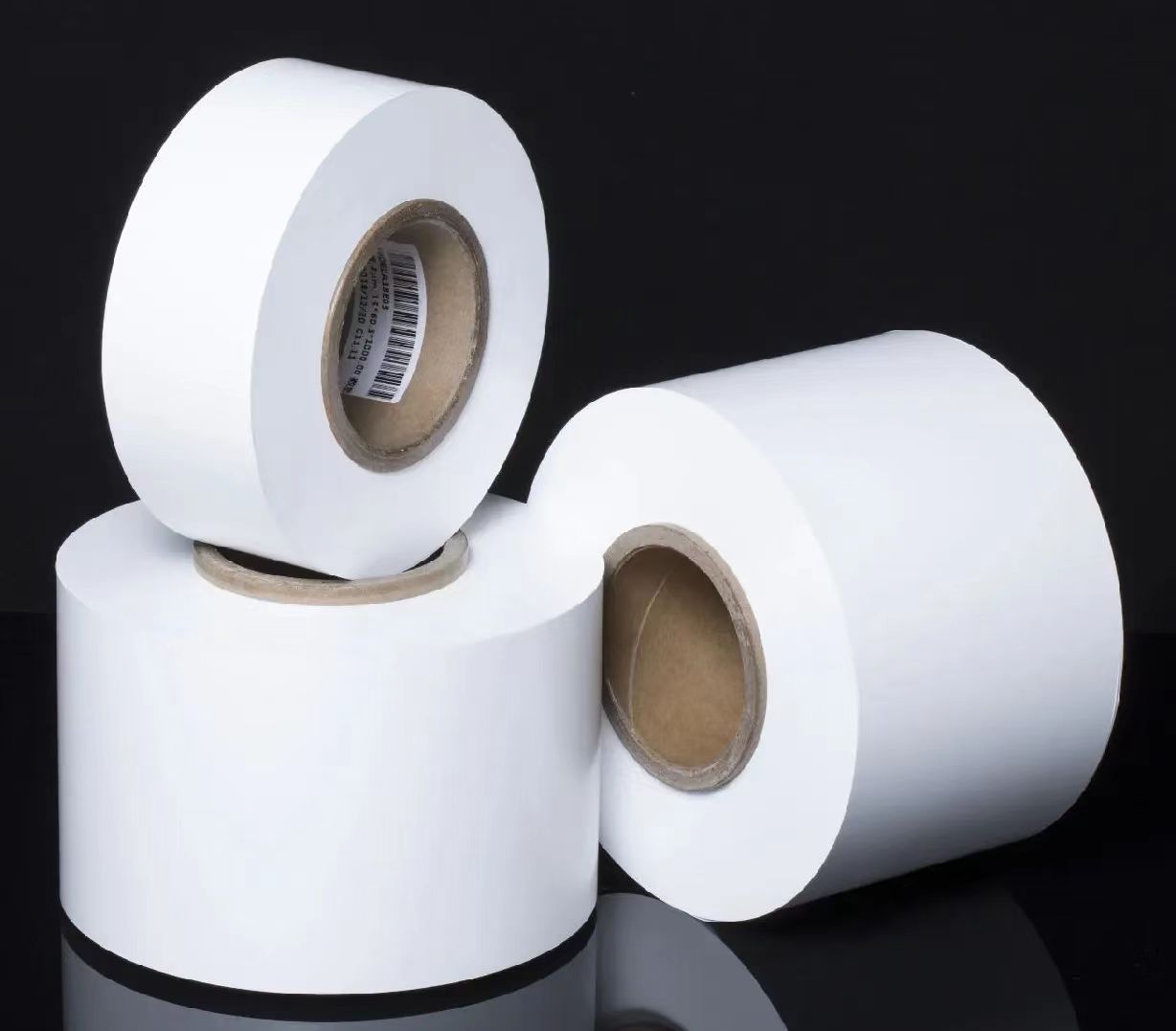
Polyolefin materials remain the undisputed industry standard for base films. Polyethylene (PE) and Polypropylene (PP) dominate the market because they offer excellent chemical stability against harsh carbonate solvents. They also provide a highly favorable cost-to-performance ratio compared to exotic non-woven materials. Manufacturers utilize two primary production methods to create the required microporous structure, and the choice of method fundamentally changes the film's physical properties.
The dry process relies on mechanical stretching to create pores. It is a straightforward, solvent-free manufacturing technique that favors thicker, more robust films. Manufacturers extrude the polymer resin into a thin precursor film. They anneal the film at elevated temperatures to enhance and align the crystalline structure. Finally, they stretch the film uniaxially (in the machine direction) or biaxially. This mechanical stretching physically pulls the lamellar crystals apart, forming slit-like micropores. PP or PP/PE/PP multi-layer blends are common in this process.
Pros: This method offers lower manufacturing costs because it requires fewer processing steps. No solvent recovery systems are required, reducing the environmental footprint. PP films boast a higher melting point, improving high-temperature stability and raising the meltdown threshold.
Cons: The process yields lower overall porosity compared to wet methods. It creates larger pore size variance, which can lead to uneven current density. Manufacturers generally limit this process to thicker films, typically above 12 microns, making it unsuitable for the highest energy density applications.
The wet process utilizes thermally induced phase separation (TIPS). It is a complex, chemically intensive process that produces highly uniform, ultra-thin films. Manufacturers mix PE resin with hydrocarbon liquids, such as paraffin oil, at high temperatures. They extrude this heated mixture into a gel-like film. They stretch the film biaxially to orient the polymer chains. Finally, they extract the hydrocarbon solvent using volatile chemicals like methylene chloride. Removing the oil leaves behind a highly interconnected, sponge-like microporous structure.
Pros: This yields highly uniform pore distribution, ensuring consistent ionic flow across the entire electrode surface. It provides higher tensile strength in both the machine and transverse directions. It is capable of producing ultra-thin profiles down to 5 microns, maximizing the space available for active materials.
Cons: The wet process involves higher production complexity and massive capital expenditure for extraction equipment. Environmental and solvent management costs are significant. The lower base melting temperature of PE requires careful thermal management and almost always necessitates a ceramic coating for safety.

Post-extrusion mechanical processing heavily impacts the final product. Calendering affects the crystalline structure and ensures strict thickness uniformity across the web. Stretching parameters determine the final tensile strength. Transverse direction (TD) shrinkage is a direct result of how the film is stretched laterally during production. Poorly controlled stretching leaves residual stress in the polymer matrix. When the cell heats up during operation, this stress releases, leading to severe shrinkage that can expose the edges of the electrodes and cause a catastrophic short circuit.
Technical Feature |
Dry Process (Melt Extrusion) |
Wet Process (Phase Inversion) |
|---|---|---|
Primary Base Material |
Polypropylene (PP) |
Polyethylene (PE) |
Pore Structure Morphology |
Slit-like, highly directional |
Sponge-like, highly interconnected |
Typical Thickness Range |
12 to 25+ microns |
5 to 12 microns |
Tensile Strength Profile |
High in Machine Direction (MD) only |
High in both MD and Transverse Direction (TD) |
Manufacturing Complexity |
Low (No solvent extraction) |
High (Requires solvent recovery systems) |
Base polyolefin films struggle to meet the extreme safety demands of modern high-capacity cells. As energy densities push higher, the risk of thermal runaway increases proportionally. Coatings bridge this performance gap. When evaluating Lithium Battery Separator Films, engineers must specify the exact coating architecture required for their application. Bare films are rarely used in modern automotive or grid-scale applications.
Manufacturers apply inorganic ceramic particles to one or both sides of the base film using specialized binders. Alumina (Al2O3) and boehmite are the most common materials due to their thermal stability and cost-effectiveness. These coatings yield drastic improvements in cell safety. They reduce thermal shrinkage to near zero at high temperatures exceeding 150°C. Even if the underlying PE film melts, the ceramic layer maintains physical separation between the electrodes. Furthermore, the hydrophilic nature of the ceramics improves electrolyte wettability, speeding up the filling process. Crucially, the hard ceramic layer provides enhanced puncture resistance against sharp lithium dendrites and manufacturing debris.
Organic coatings offer distinct functional advantages beyond pure thermal resistance. Polyvinylidene fluoride (PVDF) and aramid coatings are widely utilized in premium cell designs. PVDF improves adhesion between the separator and the electrodes during the hot-pressing phase of assembly. This creates a tighter cell roll, reducing internal resistance and preventing electrode shifting during vibration. Aramid coatings provide superior high-voltage stability, making them ideal for next-generation cells operating above 4.3 volts. Composite coatings, blending ceramic particles with polymeric binders, offer the ultimate combination of thermal stability, puncture resistance, and electrode adhesion.
The method of application dictates coating quality and consistency. Slot-die, gravure, and dip coating are standard techniques on the production floor. Slot-die coating offers precise thickness control, allowing manufacturers to apply layers as thin as 2 microns with minimal variance. Gravure coating allows for high-speed application but requires meticulous maintenance of the engraved rollers. Application precision directly impacts coating uniformity. Poor control leads to uneven thickness or pore blockage. Blocked pores restrict ion flow, increasing internal resistance, causing localized lithium plating, and severely degrading cell performance.
Scaling coated separators presents unique manufacturing challenges that procurement teams often overlook. Shedding during transport and handling is a major risk. Loose ceramic particles contaminate the cleanroom environment and can cause micro-shorts if they embed in the active material. Coatings also impact overall calendering processes and web handling. The added friction and stiffness of a coated film can reduce cell winding speeds and require specialized tension control systems. Engineers must balance the safety benefits of advanced coatings against these assembly line realities to maintain high production yields.
Procurement teams cannot rely on basic marketing spec sheets. Rigorous technical evaluation is required to ensure cell safety and performance. You must analyze specific physical, mechanical, and thermal metrics using standardized testing protocols before approving a supplier for mass production.
Porosity measures the void volume within the film, typically ranging from 35% to 50%. Too low, and the cell suffers from high internal resistance. Too high, and the film loses mechanical integrity. Permeability dictates how easily ions pass through those voids. We measure this using the Gurley value (ASTM D726). Gurley seconds represent the time required for 100cc of air to pass through one square inch of the film under constant pressure. Lower Gurley seconds indicate higher permeability. The MacMullin number acts as a lens for ionic conductivity. It compares the electrical resistance of the electrolyte-soaked separator to the bulk electrolyte itself. A lower MacMullin number indicates a more efficient pore structure.
Mechanical strength prevents catastrophic manufacturing failures. Test both Machine Direction (MD) and Transverse Direction (TD) tensile strength using ASTM D882 standards. High tensile strength prevents the film from snapping under high-speed winding tension, which can exceed several kilograms of force. Puncture resistance is the primary safety metric for preventing internal shorts. It is measured by the force required for a standard needle to pierce the film (ASTM F1306). High puncture resistance prevents assembly-line shorts from burrs on the metal foil current collectors. It also stops in-field dendrite penetration during the operational life of the battery.
Thermal stability defines the safety limits of the cell during an abuse event. You must demand acceptable industry thresholds for dimensional stability at elevated temperatures. High-quality films exhibit less than 5% shrinkage at 105°C for one hour in both MD and TD. The critical delta between shutdown temperature and meltdown temperature matters immensely. Shutdown occurs when pores close to stop ion flow (around 130°C). Meltdown occurs when the entire film loses structural integrity and ruptures (around 150°C to 170°C). A wider delta provides a larger safety window for the battery management system to react before total cell collapse.
Supplier validation is non-negotiable in battery manufacturing. You must verify automotive-grade certifications. IATF 16949 certification demonstrates a commitment to rigorous quality management and continuous improvement. Demand full traceability for every roll produced, down to the specific resin batch and extrusion shift. Request verifiable quality control data, including automated inspection logs and CPK values for thickness variance. This level of scrutiny is essential when sourcing materials for high-stakes automotive, aerospace, or grid-storage applications where a single cell failure can lead to a massive thermal event.
Performance Metric |
Testing Standard |
Target Range (Typical EV Cell) |
|---|---|---|
Thickness Variance |
Micrometer Profiling |
± 0.5 microns |
Gurley Value |
ASTM D726 |
150 - 250 seconds / 100cc |
Puncture Strength |
ASTM F1306 |
> 350 gram-force (gf) |
Thermal Shrinkage (105°C / 1hr) |
TMA Analysis |
< 3% in MD and TD |
There is no universal separator film. The choice is strictly dictated by the specific battery chemistry and the intended application. LFP cells prioritize cost and longevity, while NMC cells demand maximum energy density and thermal stability. Grid storage systems have vastly different requirements than high-performance electric vehicles. You must match the physical properties of the film to the mechanical realities of your production line and the thermal realities of your end product.
For cost-sensitive, lower-energy-density, or high-power applications, recommend dry-process PP films. Their wider safety margins, robust mechanical strength, and lower costs make them ideal. For high-energy-density EV cells, recommend wet-process, ceramic-coated PE films. Ultra-thin profiles, strict thermal stability, and maximum reliability are mandatory in these demanding environments where energy density is the primary design constraint.
To move forward with procurement and engineering validation, execute the following steps:
Request comprehensive technical data sheets (TDS) from prospective suppliers to verify baseline Gurley, porosity, and thickness variance metrics.
Initiate independent puncture and tensile testing on sample rolls to confirm mechanical strength claims against your internal manufacturing standards.
Conduct pilot-scale winding trials to validate mechanical compatibility with your specific assembly equipment, focusing on edge alignment and tension control.
Audit the supplier's automated optical inspection (AOI) capabilities to ensure rigorous defect detection protocols are actively running on their extrusion and coating lines.
A: The dry process extrudes and mechanically stretches polypropylene to create slit-like pores. It costs less but yields lower porosity. The wet process mixes polyethylene with a solvent, extrudes it, and extracts the solvent to create a highly uniform, sponge-like pore structure. Wet process films can be made much thinner and serve as the standard for high-density EV cells.
A: Polyolefins, specifically polyethylene (PE) and polypropylene (PP), offer an exceptional balance of properties. They provide excellent chemical resistance to harsh battery electrolytes. They possess the necessary mechanical strength for high-speed winding. Furthermore, they offer a favorable cost-to-performance ratio compared to exotic polymers or non-woven materials.
A: Ceramic coatings, like alumina or boehmite, provide a rigid, heat-resistant framework. When the base polyolefin film reaches its melting point and shuts down ion flow, the ceramic layer maintains physical separation between the electrodes. This prevents massive thermal shrinkage and stops the direct short circuit that causes catastrophic thermal runaway.
A: There is no single ideal thickness; it depends entirely on the application. High-power tools might use robust 16-20 micron films for durability. Modern high-energy-density electric vehicle (EV) cells typically utilize ultra-thin films ranging from 5 to 12 microns to maximize the volume available for active electrode materials.
A: Permeability is primarily measured using the Gurley test (ASTM D726). This test records the time in seconds required for 100cc of air to pass through one square inch of the film under constant pressure. A lower Gurley value indicates higher permeability, which generally correlates to better ionic conductivity within the cell.
A: Puncture resistance ensures the film can withstand sharp objects. During manufacturing, it prevents burrs or rough edges on the metal electrodes from piercing the separator. During operation, high puncture resistance prevents lithium dendrites—sharp metallic structures that form on the anode—from penetrating the film and causing a dangerous internal short circuit.


