Welcome to our website! Call Us: +86-18622194621 E-mail: toptac@fancyco.com
Products


loading
| SKU: | |
|---|---|
| Availability: | |
| Quantity: | |
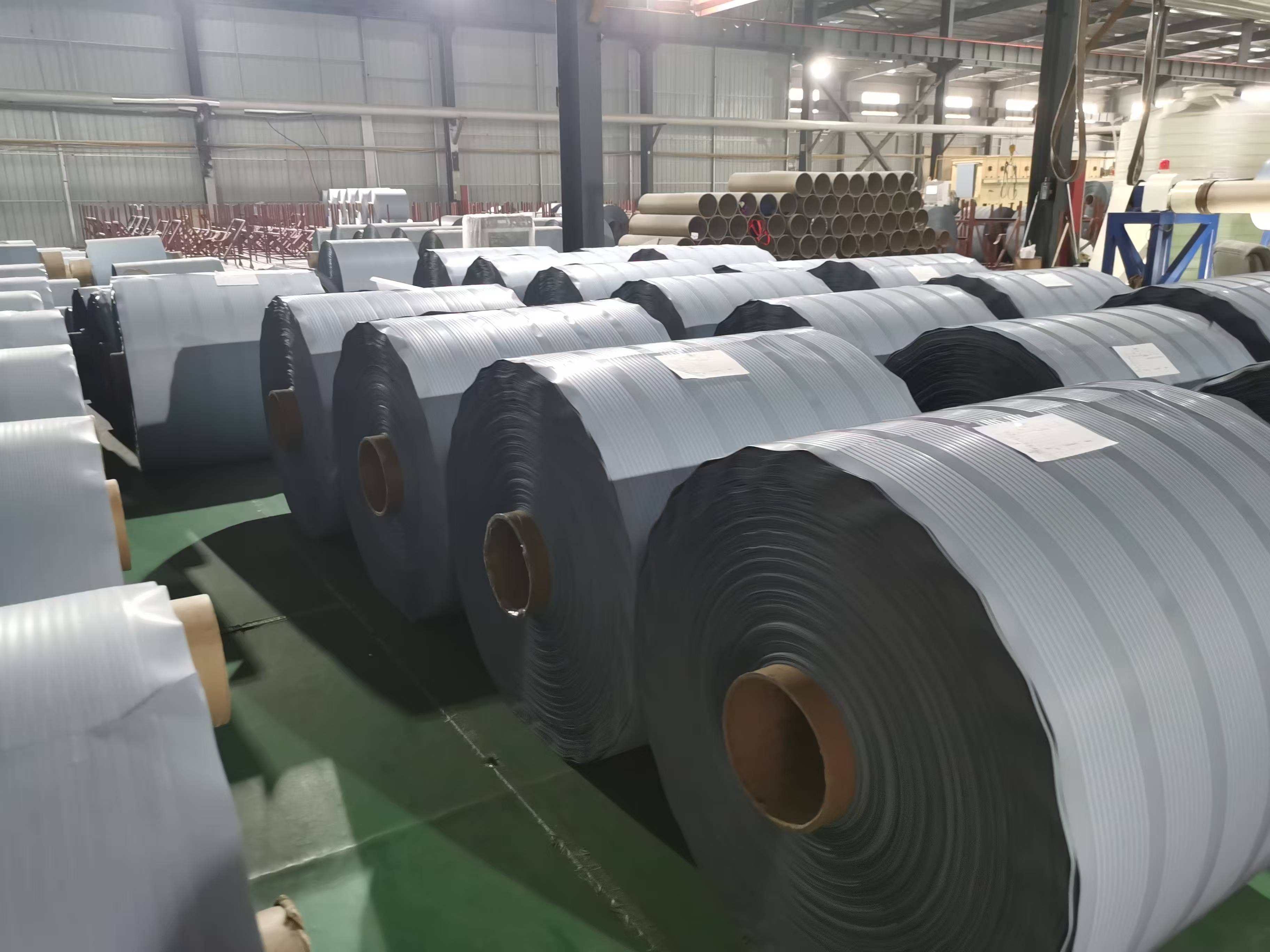
A good battery separator is rarely the most visible part of a battery, but it is one of the parts that most strongly shapes service life, safety, and consistency. Our Straight-Rib Microporous PE Separator Film for Lead-Acid Batteries is designed for manufacturers who need a separator that feels stable in production, performs reliably in service, and helps battery systems stay efficient under repeated charging and discharging.
The film combines a smooth outer surface with a straight rib inner side. This structure is practical, not decorative. The smooth surface supports close, clean contact inside the cell structure, while the straight ribs create controlled spacing and help electrolyte move more evenly across the active area. In use, that means a more orderly internal environment, more consistent ionic movement, and less risk of performance drift caused by unstable acid distribution.
The material itself is built around microporous PE film logic widely associated with lower resistance pathways, strong insulation between plates, and reliable separator behavior in demanding battery systems. Industry references consistently connect PE separator design with oxidation resistance, low electrical resistance, controlled pore structure, and reduced short-circuit risk. Typical manufacturing logic for PE separators also centers on polymer blending, rib-forming extrusion, stretching, and pore development to achieve a stable microporous network.
For buyers and engineers, the value is straightforward: a separator should not only separate. It should help the battery breathe, flow, and work with less internal stress. That is exactly the role this film is built to serve.
This product is developed to solve real battery problems, not to add empty technical language. Each feature is tied to a practical operating benefit.
Straight ribs help maintain plate spacing more consistently
Rib geometry supports acid circulation and distribution inside the battery
Better internal flow helps reduce localized underperformance across the plate surface
A separator with poor internal geometry can make a battery feel uneven long before the battery officially fails. Straight ribs create a cleaner internal pathway, helping electrolyte move through the cell in a more predictable way. Industry sources repeatedly note that rib geometry and separator design directly affect battery output, cycle efficiency, and operating stability.
Microporous structure supports ion transport
PE film separates positive and negative plates effectively
Smaller pore structure helps reduce short-circuit risk and improves assembly suitability
USEON describes PE separator as a microporous membrane based on polyethylene and silica, highlighting smaller pore size, improved battery capacity, better cycle life, and easier mechanical assembly. That matches exactly why this product matters in production: it brings together insulation, permeability, and process reliability in one material layer.
Temperature resistance up to 165°C
Thermal shutdown activation at 120°C
Supports safer battery behavior under abnormal heat conditions
When battery temperature rises unexpectedly, separator behavior becomes critical. A separator that keeps its structure longer and reacts predictably under heat helps lower system risk. Benchmark pages on separator materials consistently connect shutdown behavior and heat resistance with improved safety performance in battery systems.
Thickness range: 9 μm–25 μm
Rib distance options: 4 / 5 / 7 / 10 / 12 mm
Adaptable to different lead-acid battery designs and internal layouts
This flexibility matters because battery performance is never only about chemistry. It is also about fit. A separator that can be matched to plate structure, acid volume, and intended duty cycle gives you a more usable foundation for both product development and stable volume production.
The following specifications are retained from the original product page and presented as a dedicated decision-making module for easier review.
Parameter | Value |
|---|---|
Product Name | Straight-Rib Microporous PE Separator Film for Lead-Acid Batteries |
Material | Polyethylene (PE) |
Separator Type | Microporous PE separator film |
Surface Structure | Smooth outer surface |
Inner Design | Straight rib inner structure |
Rib Distance | 4 mm / 5 mm / 7 mm / 10 mm / 12 mm |
Thickness | 9 μm–25 μm |
Temperature Resistance | Up to 165°C |
Thermal Shutdown | 120°C |
Suitable Battery Type | Lead-acid batteries |
Typical Applications | Automotive, industrial, backup power, telecom, railway, energy storage |
These parameters are commercially useful because they directly affect internal spacing, electrolyte behavior, thermal response, and compatibility with different battery builds. Competitor references in this category commonly present thickness, pore-related performance, shrinkage or heat behavior, puncture-related strength, and application matching as core technical buying points.
Below is the content framework distilled from the competitor set and fully applied to this product.
Content Dimension | What It Means for This Product | Buyer Value |
|---|---|---|
Material System | PE-based microporous separator film | Stable insulation and separator reliability |
Microporous Structure | Supports ion flow while separating plates | Better efficiency and safer operation |
Surface/Rib Design | Smooth outer + straight rib inner | Lower resistance potential and improved acid movement |
Thermal Behavior | Up to 165°C resistance, 120°C shutdown | More predictable heat response |
Mechanical Reliability | Film toughness for assembly handling | Lower deformation risk during battery production |
Application Fit | Automotive, standby, industrial, telecom, railway | Easier product matching |
Process Consistency | Specification options for thickness and rib spacing | Better fit across battery designs |
These dimensions mirror the way serious separator suppliers structure technical communication. Microporous stresses oxidation resistance, low electrical resistance, and application-focused designs. Suzuki Battery ties porosity, thickness, and rib geometry directly to battery output and cycle efficiency. USEON explains the membrane through material composition and production logic. Together, they show that buyers in this category are not just purchasing film; they are purchasing controlled internal battery behavior.
This separator film is suitable wherever lead-acid batteries must deliver stable performance with controlled internal spacing and reliable acid management.
Automotive starter batteries requiring dependable cranking support and efficient internal conductivity
Industrial batteries where durability and structural consistency matter over long operating cycles
Backup power systems where internal reliability is more important than visible hardware
Telecom and railway batteries where safety margins and stable separator behavior are critical
Energy storage battery systems where separator consistency helps support long-term cycling performance
Competitor sources repeatedly segment separator products by end use, especially between automotive, industrial, and enhanced flooded battery applications. That pattern is useful because application fit changes separator priorities: thin backweb and lower resistance may matter more in automotive systems, while heavier-duty structures may matter more in industrial designs.
We keep the practical structure that battery makers actually use.
This product is not written around vague innovation claims. It is built around commercially relevant PE separator logic: microporous structure, rib geometry, heat behavior, and specification flexibility.
We preserve spec clarity.
Buyers should not have to guess key values. Thickness, rib spacing, temperature resistance, and shutdown behavior are clearly presented.
We write and supply with production in mind.
The product is positioned not only as a material, but as a controllable part of battery quality, assembly stability, and service life.
We align with real market language.
Leading separator suppliers consistently frame value around low resistance, oxidation resistance, safety, process consistency, and application matching. Our content and positioning follow that logic while remaining original and product-specific.
We focus on usable detail instead of inflated claims.
That makes the page easier for engineers, sourcing teams, and technical reviewers to evaluate quickly.
It keeps the positive and negative plates apart while still allowing ionic movement through the electrolyte. In practical terms, it helps prevent internal short circuits, supports battery reaction efficiency, and contributes to cycle stability. Industry references describe the separator as a core safety and performance material, not a passive layer.
Straight ribs help maintain spacing and guide electrolyte flow more effectively. Separator design literature notes that rib geometry directly affects acid flow, porosity performance, and overall battery output. A better rib structure can help the battery work more evenly across the active plate area.
A controlled microporous structure helps balance two needs at once: electrical insulation between plates and efficient ion transport through the electrolyte. That balance is one of the reasons PE separators are widely used in lead-acid systems.
Thermal shutdown is a safety-oriented response. When temperatures rise beyond a critical point, shutdown behavior helps interrupt ion flow and reduces the risk of escalating failure. Battery separator suppliers commonly highlight shutdown-related features as part of separator safety performance.
It is suitable for lead-acid battery systems used in automotive, industrial, standby, telecom, railway, and energy storage fields. The final selection should match battery design, operating environment, and target performance level. Competitor references show that separator choice is usually tied to battery type, cycling demand, and operating conditions.
Yes. This product offers multiple rib distance options and a thickness range of 9 μm–25 μm, which makes it easier to align with different internal battery layouts and performance targets. That kind of specification flexibility is especially important when optimizing assembly consistency and acid flow behavior.
Quick Links
Contact Information


