Welcome to our website! Call Us: +86-18622194621 E-mail: toptac@fancyco.com

Views: 0 Author: Site Editor Publish Time: 2026-04-17 Origin: Site
In modern cell design, the separator represents far more than a simple plastic film. It acts as the ultimate gatekeeper inside the battery casing. Separators must maintain a highly delicate equilibrium. They allow rapid lithium-ion transit during high-drain cycles. Simultaneously, they must serve as an absolute physical barrier. If they fail, catastrophic thermal runaway rapidly follows.
Polypropylene (PP) and Polyethylene (PE) dominate the current market. However, they feature distinctly different molecular structures. Their manufacturing paths are also entirely different. These variables establish strict performance ceilings. They dictate highly specific use cases across various industries. We created this guide as an engineering and procurement evaluation tool. You can use it to evaluate material datasheets confidently. It will help you select the exact polymer architecture. Ultimately, you will match your cell chemistry and operating environment perfectly.
Thermal Shutdown vs. Integrity: A PE separator melts at a lower temperature (~130°C–140°C) to rapidly shut down thermal runaway, whereas PP maintains structural integrity up to ~165°C.
Process determines structure: Dry-process PP yields strong, slit-like pores ideal for durable, cost-effective applications; Wet-process PE creates highly uniform, dense interconnected networks suited for high-energy-density cells.
The Wettability Paradox: While pure PE micro-pores take longer to initially absorb electrolytes, specialized silica-doped Polyethylene Battery Separators retain surfactants superiorly, ultimately delivering lower long-term electrical resistance.
Composite Solutions: The industry standard for high-end applications is shifting toward PP/PE/PP trilayers and ceramic-coated PE to achieve both early thermal shutdown and sustained mechanical isolation.
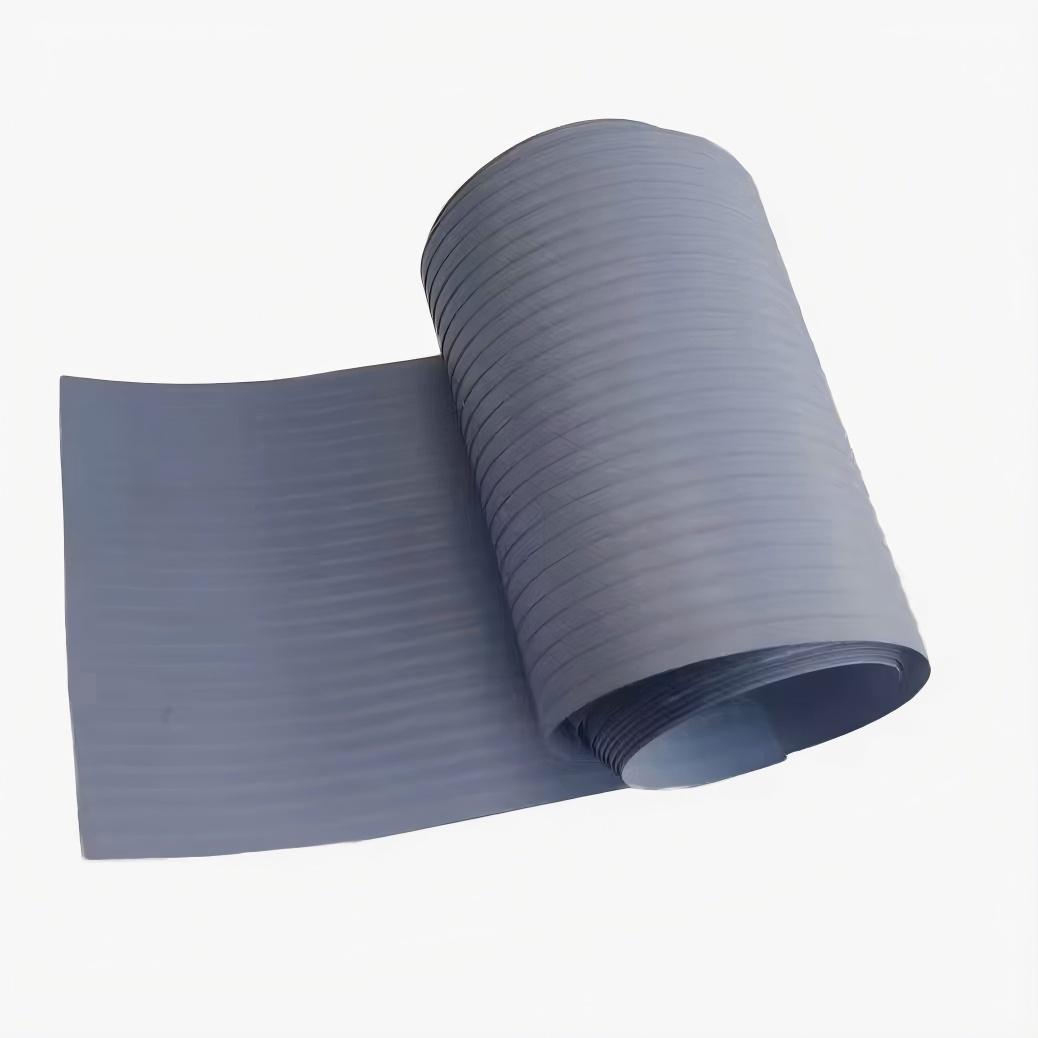
Engineers cannot evaluate separator performance without understanding how manufacturers create the material. The production method directly dictates the physical pore structure. This structure ultimately governs ion flow and mechanical strength.
The dry manufacturing process relies entirely on mechanical forces. Manufacturers utilize melt-extrusion techniques. They stretch the polymer film bi-directionally to induce pore formation mechanically. The material pulls apart at the microscopic level.
This solvent-free approach delivers highly cost-effective engineering outcomes. It produces an anisotropic structure featuring slit-like pores. These specific pores provide remarkable transverse strength. They offer excellent puncture resistance against internal cell pressures. Manufacturers favor this process for creating rugged, durable films.
The wet process requires a fundamentally different chemical approach. Manufacturers blend ultra-high molecular weight polyethylene (UHMWPE) alongside hydrocarbon liquids. They extrude the resulting film carefully. Finally, they extract the oil phase utilizing specific chemical solvents. This extraction leaves behind a highly porous network.
This process demands heavier capital equipment. However, it yields a highly uniform, complex web-like microporous structure. Engineers highly value this method because it allows for significantly thinner films. You can fit more active material into the cell casing. Finding a high-quality PE separator is crucial for maximizing modern energy density limits.
Feature | Dry Process (PP) | Wet Process (PE) |
|---|---|---|
Primary Mechanism | Melt-extrusion and mechanical stretching | UHMWPE blending and solvent extraction |
Pore Structure | Anisotropic, slit-like pores | Uniform, web-like microporous network |
Thickness Ceiling | Generally thicker | Extremely thin capability |
Engineering Benefit | Solvent-free, cost-effective, durable | High energy density, complex porosity |
Selecting a separator requires balancing competing engineering priorities. You must evaluate thermal safety thresholds against mechanical rigidity. You must also consider long-term electrical resistance.
Heat management represents the most critical safety variable in battery design. Separators feature a built-in "thermal shutdown" mechanism. As internal cell temperatures rise, the polymer begins to soften. The pores fuse shut. This action blocks ion flow entirely. It halts the electrochemical reaction before catastrophic ignition occurs.
Polyethylene melts at approximately 130°C. It acts as an early fail-safe. It shuts down the battery rapidly during thermal runaway events. Conversely, Polypropylene resists high-heat mechanical shrinkage better. It maintains structural integrity up to a 165°C threshold. However, this higher melting point means PP triggers the safety shutdown much later.
Battery engineers often encounter a fascinating wettability paradox. Polypropylene surfaces wet faster initially during manufacturing. However, pure PP struggles to retain surface-active agents over long periods. Harsh acidic environments strip these agents away quickly.
Pure PE micro-pores trap air easily. They take longer to initially absorb electrolytes. To solve this, manufacturers engineer specialized solutions. An advanced Polyethylene Battery Separator utilizes silica additives. These additives strongly adsorb surfactants. Once fully saturated, PE achieves a highly stable, low-resistance state. Because the film is extremely thin, it offers the shortest possible ion migration path.
Separators face intense physical abuse during both manufacturing and operation. Winding tension during assembly stretches the film severely. Later, internal lithium dendrite growth threatens to pierce the material. A puncture causes an immediate short circuit.
Polypropylene offers higher baseline rigidity. It naturally resists mechanical deformation better. Polyethylene is inherently softer. Therefore, an automotive-grade PE separator requires high-molecular-weight formulations. Manufacturers also apply robust coatings to prevent structural fatigue. These modifications ensure the film survives aggressive dendrite penetration attempts.
Best Practices for Mechanical Evaluation
Test winding tension limits on actual factory assembly lines before ordering bulk material.
Evaluate puncture resistance using nail penetration tests specific to your chosen cell chemistry.
Monitor transverse shrinkage data closely during prolonged high-temperature baking.
There is no universally perfect separator. The ideal choice depends entirely on your specific cell chemistry. You must also consider the anticipated operating environment.
You should specify dry-process Polypropylene when mechanical durability outranks maximum energy density. This material perfectly suits Lithium Iron Phosphate (LFP) batteries. LFP chemistries prioritize safety and cycle life over extreme power output.
Dry PP also dominates large-scale grid energy storage installations. Cost-efficiency matters significantly in massive stationary batteries. Furthermore, low-end consumer electronics utilize PP widely. These devices rarely push thermal limits, making PP a safe and economical choice.
Wet-process Polyethylene represents the dominant choice for high-performance applications. Nickel Manganese Cobalt (NMC) batteries rely heavily on PE. Ternary lithium EV power batteries require extreme energy density. Flagship consumer devices also demand the thinnest possible internal components.
You must specify wet PE for environments demanding high charge and discharge rates. Fast-charging EV scenarios generate rapid heat spikes. The dense, uniform porosity of PE manages ionic flux flawlessly. The 130°C thermal-shutdown fail-safe provides crucial early intervention during overcharge events.
Ambient operating temperatures drastically alter electrolyte viscosity. Cold climates thicken electrolytes significantly. Sluggish liquid impedes ion mobility. For sub-zero applications, you should favor PE variants featuring engineered larger pore distributions. These larger pores maintain necessary charge and discharge efficiency despite thickened fluids.
Conversely, high-heat applications present shrinkage risks. Prolonged exposure to elevated temperatures causes polymers to warp. In these scenarios, you must demand pure PP. Alternatively, you can specify heavily coated PE composites. These solutions successfully resist thermal shrinkage and maintain physical isolation.
Modern battery architectures push traditional plastics past their physical limits. The industry continuously develops hybrid solutions. These composites combine the strengths of multiple materials.
Engineers developed the PP/PE/PP trilayer to create a dual-action safety architecture. The industry affectionately calls this the "Shutdown Sandwich". It elegantly solves the thermal response dilemma.
The inner PE layer serves as the primary thermal fuse. It melts early at 130°C to cut off ion flow safely. Meanwhile, the outer PP layers maintain rigid physical separation. They do not melt until internal temperatures hit 165°C. This layered approach prevents electrode contact even after the battery officially shuts down.
Applying inorganic coatings onto a PE base drastically alters its mechanical profile. Manufacturers typically utilize alumina or silica ceramic slurries. They coat one or both sides of the base film.
This functional coating delivers tremendous engineering outcomes. It drastically reduces transverse shrinkage. Shrinkage approaches 0% even at extreme high temperatures. The rigid ceramic layer also improves puncture strength against sharp dendrites. During mandatory crush and abuse testing, ceramic-coated films extend discharge times safely. They prevent instant energy release upon impact.
Common Mistakes in Coating Selection
Assuming all ceramic coatings offer the same adhesion strength. Poor adhesion causes shedding during winding.
Ignoring the added thickness. You must account for the ceramic layer when calculating total cell capacity.
Failing to test coating compatibility against custom electrolyte chemical blends.
Sourcing high-quality separators requires strict technical due diligence. You must demand precise laboratory data from potential suppliers. Use the following evaluation criteria to qualify your vendors.
Assess Transverse Direction (TD) Shrinkage Tolerances: Thermal warping destroys batteries. Demand laboratory data verifying shrinkage at 90°C–130°C. Premium manufacturers should demonstrate minimal to 0% TD shrinkage over prolonged baking periods.
Verify Gurley Value Consistency: The Gurley value measures air permeability. You must ensure this metric has minimal variance across the entire roll width. Consistent permeability guarantees uniform ion flux. It directly prevents localized lithium plating.
Chemical Compatibility and Aging: Do not guess regarding chemical reactions. Request surfactant retention data. Ensure a zero reactive footprint exists when combining the film with custom electrolyte formulations. If you need robust resistance in specialized acidic cells, sourcing a dedicated Polyethylene Battery Separator is non-negotiable.
Next Steps for Evaluation: Never buy blind. Recommend requesting sample rolls immediately. Run pilot-line winding tests to evaluate mechanical tearing. Finally, conduct destructive thermal runway validation testing to confirm shutdown thresholds.
Selecting the right battery separator requires deep engineering analysis. The choice between PP and PE is not simply about declaring one material superior. It involves matching the exact thermal and spatial tolerances of your specific cell design. PP offers unbeatable ruggedness and high-heat structural integrity. PE delivers unparalleled thinness, uniform porosity, and early thermal-shutdown safety.
You must evaluate your performance ceilings carefully. Fast-charging EV batteries demand different architectures than stationary grid storage units. Always account for operating climates, assembly line tension, and anticipated cycle life.
We highly encourage engineers and procurement leads to take immediate action. Consult directly with technical material specialists. Request detailed chemical datasheets for both pure films and coated composites. Initiate rigorous pilot testing to ensure the chosen polymer architecture supports your ultimate battery design goals safely.
A: Yes, but strictly when modified. You must utilize high-temperature ceramic coatings. Alternatively, you can integrate the film into a PP/PE composite structure. Pure unmodified PE melts at 130°C. Without robust coatings, you risk premature pore closure and unnecessary battery shutdown in hot environments.
A: An AGM separator (Absorbent Glass Mat) is designed primarily for lead-acid batteries. It acts as an electrolyte sponge and physical spacer. Conversely, PP/PE films are highly engineered micro-porous membranes. Manufacturers design them specifically to manage lithium-ion dynamics and provide rapid thermal shutdown fail-safes.
A: Wet-process manufacturing is chemically complex. It involves intricate solvent extraction procedures and expensive solvent recovery systems. Furthermore, the precision biaxial stretching equipment required to create uniform micro-pores demands massive capital investment. Dry-process PP avoids solvents entirely, keeping production overhead substantially lower.


