Welcome to our website! Call Us: +86-18622194621 E-mail: toptac@fancyco.com

Views: 0 Author: Site Editor Publish Time: 2025-08-25 Origin: Site
Increased likelihood of addiction, especially among young people.
Potential mouth issues such as gum disease and sores.
Nicotine’s effects on brain development and heart health.
The presence of harmful chemicals or carcinogens in some pouches.
Young people and non-smokers face greater nicotine pouches health risks. It’s best to consult a doctor before using nicotine pouches.
Nicotine pouches give you nicotine, which is addictive. They can hurt your mouth and gums. They can also cause heart problems. These pouches do not have tobacco or make smoke.
Young people, pregnant people, and non-smokers have more health risks. They should not use nicotine pouches. This helps protect their brains and health.
Some side effects are nausea, sore mouth, headache, and fast heartbeat. Some side effects happen fast. Others take longer to show up.
Nicotine pouches have fewer bad chemicals than cigarettes or smokeless tobacco. But they still have risks like addiction. They can also cause long-term heart and brain problems.
If you want to stop using nicotine, there are safer choices. FDA-approved products like patches and gum are better. Always talk to a doctor before using nicotine pouches.
You use nicotine pouches by putting them under your top lip. These pouches look like Swedish snus, but they do not have tobacco leaf. They have nicotine powder or nicotine salts inside. When you put a pouch in your mouth, your saliva starts working on it. The nicotine melts and goes through your mouth lining. This is called buccal absorption. Nicotine gets into your blood through small blood vessels in your gums. You feel the effects in a few minutes, and they can last for about an hour. You do not breathe in smoke or vapor when using nicotine pouches. You get a steady amount of nicotine, which helps with cravings and withdrawal. Many people use nicotine pouches instead of tobacco products. The FDA says nicotine pouches are tobacco products, even though they do not have tobacco leaf. In 2025, the FDA has allowed some nicotine pouch brands after checking their safety and ingredients.
Tip: Nicotine pouches might seem safer than smoking, but they still have health risks. You should be careful and talk to a doctor before using them.
Nicotine pouches have different ingredients to give you nicotine and make them taste good. Here are the main things you will find in popular brands:
Nicotine (usually pharmaceutical-grade or nicotine salts)
Plant-based fibers like microcrystalline cellulose or cellulose from eucalyptus or pine
Food-grade flavorings (natural and artificial) for taste, including flavored nicotine pouches
pH adjusters such as sodium carbonate and sodium bicarbonate to help your body absorb nicotine
Sweeteners like sucralose or acesulfame K
Water for moisture and mouthfeel
Stabilizers such as gum arabic to keep the pouch intact
All these ingredients follow FDA and EU safety rules. Companies test them often to make sure they are safe for you. Some countries do not allow nicotine pouches, especially ones with lots of nicotine or fun flavors. You should check your local laws before buying flavored nicotine pouches.
Ingredient | Purpose |
|---|---|
Nicotine | Delivers active effect |
Plant-based fibers | Structure and safety |
Flavorings | Taste and variety |
pH adjusters | Improve nicotine absorption |
Sweeteners | Enhance flavor |
Water | Moisture control |
Stabilizers | Maintain pouch integrity |
Nicotine pouches are popular because they do not have tobacco leaf. They also do not make smoke. Some people ask, are nicotine pouches safe? The answer is not easy. These pouches give you nicotine. Nicotine is addictive and can hurt your health. Even if they look safer than cigarettes, nicotine pouches health risks are still there.
When you use nicotine pouches, nicotine goes in through your mouth. Studies show nicotine pouches give you about the same amount of nicotine as smokeless tobacco. The nicotine gets into your body slower than cigarettes. You may not feel a strong rush, but you can still get addicted. Nicotine can make you want more and cause withdrawal.
Nicotine pouches health risks can happen right away or over time. You might get mouth pain, gum problems, or sores. Some people feel sick to their stomach or have trouble digesting food. These problems can bother you every day. If they last, you might need to see a doctor more often.
Nicotine pouches do not have tobacco leaf. This means they have fewer tobacco chemicals like TSNAs and PAHs. You do not breathe in smoke, so your lungs are safer. But nicotine itself can still cause health problems. Nicotine can make your heart beat faster and raise your blood pressure. It can also change how your brain works, especially if you are young. Young people can have trouble paying attention or controlling impulses because nicotine hurts their growing brains.
Some people think nicotine pouches are only for quitting smoking. That is not true. Some people use them as their main way to get nicotine. Remember, nicotine pouches are addictive and not safe. We do not know all the long-term health risks yet because these products are new. Scientists are still learning about what they do to your body.
Here is a table that shows how addictive nicotine pouches and other nicotine products are:
Product Type | Nicotine Content (mg) | Peak Nicotine Level (Cmax, ng/mL) | Time to Peak (Tmax) | Satisfaction | Addiction Potential |
|---|---|---|---|---|---|
Nicotine Pouch | 4 - 10 | 5.2 - 18.4 | 0.83 - 1 hour | High | Lower than cigarettes |
Nicotine Gum | 4 | 4.4 | ~1 hour | Low | Lower than pouches and cigarettes |
Nicotine Lozenge | 4 | 8.3 | ~1 hour | Medium | Lower than cigarettes |
Cigarettes | N/A | 11.6 - 13.9 | 8.5 minutes | Highest | Highest |
Tip: Nicotine pouches might help some people stop smoking. You should be careful when using them. The health risks are real. Talk to a doctor before you start.
Some people have higher nicotine pouches health risks. These people should not use them. Health experts say nicotine can be very harmful for some groups. You should be careful if you are in one of these groups:
Youth, adolescents, and young adults: Nicotine can hurt your brain and make you act without thinking.
Pregnant people: Nicotine can cause problems for your baby’s growth.
Adults with small children or pets: Keep nicotine pouches away so no one eats them by accident.
Non-smokers: You should not start using nicotine pouches. They are addictive and can make you dependent.
Note: Nicotine pouches are different from snus or chewing tobacco. They do not have tobacco leaf, but they still have health risks. Store them in a cool, dry place. Never eat them like a snack.
Many people believe things about nicotine pouches that are not true. You do not need to keep them cold. If an adult swallows one by mistake, it usually does not cause big problems. You do not need to spit when you use them, unlike chewing tobacco. Rules for nicotine pouches change a lot. Check your local laws before you buy them.
Nicotine pouches can cause many side effects. Some happen right away, and others take time to show up. Knowing about these nicotine pouch side effects helps you make safer choices.
When you use nicotine pouches, you might feel side effects soon. These short-term problems are common, especially if you are new to nicotine or use a lot. Here are some of the most common immediate side effects:
Nausea
Hiccups
Dry mouth
Headache
Sore throat
Upset stomach
Trouble sleeping
Feeling nervous
You might feel dizzy or lightheaded if you use too much nicotine. Some people also say their heart beats fast or they feel shaky. These bad feelings usually go away after your body gets used to nicotine, but they can be hard to deal with.
The table below shows how often people report certain side effects in studies:
Side Effect | Reported Frequency (%) |
|---|---|
Mouth lesions | 48 |
Upset stomach | 39 |
Sore mouth | 37 |
Sore throat | 21 |
Nausea | 9 |
No adverse events | 3 |
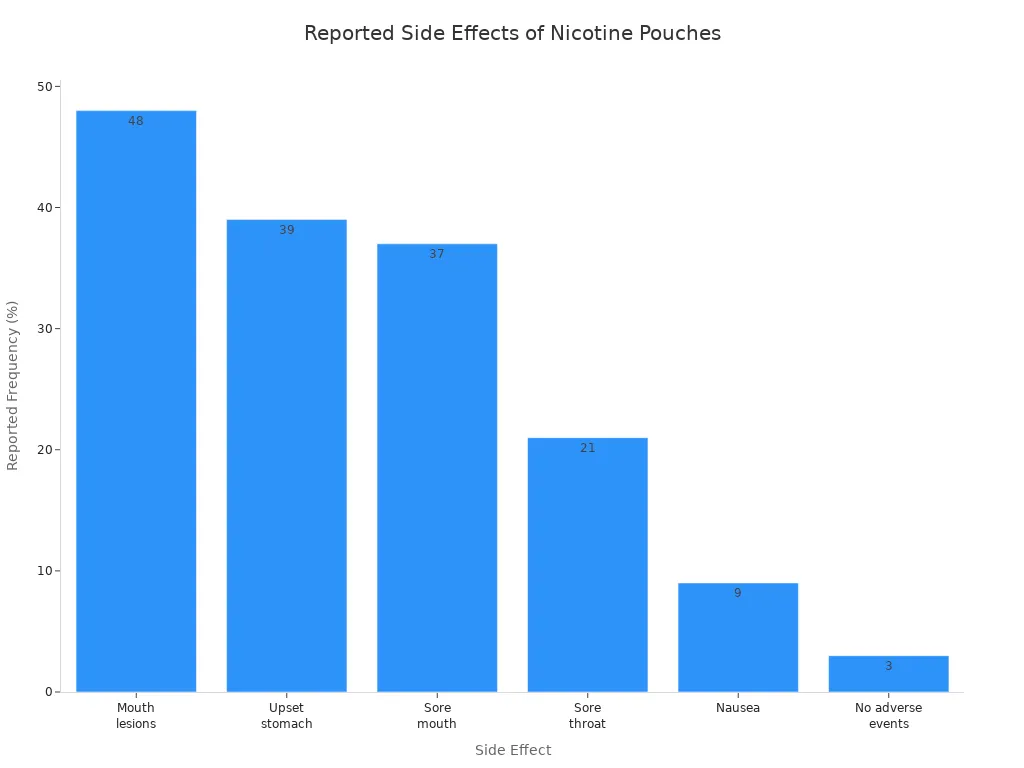
Most people have at least one side effect. Mouth problems and stomach issues are the most common. Only a few people do not have any side effects.
Nicotine pouches touch your gums and mouth lining. This can cause problems in your mouth. You might notice soreness, irritation, or white spots where you put the pouch. These changes can happen fast or after using pouches for a while.
Common oral health issues are:
Gum soreness and irritation
Mouth lesions or white spots (leukoplakia)
Mouth ulcers
Sore throat
Bad breath
Tooth decay near where you put the pouch
Gum blisters or gums pulling back
Some flavors, like spearmint or tobacco, can make soreness worse. Cool flavors in pouches can make them feel less harsh, so you might keep them in longer. This can make mouth problems more likely.
Dentists say you should check your mouth often if you use nicotine pouches. Look for color changes, sores, or swelling. Tell your dentist if you see anything strange.
Nicotine pouches do not have the same cancer-causing chemicals as smokeless tobacco. This means your risk of mouth cancer is lower than with snus. But nicotine can still hurt your gums and teeth. You might get swelling or lose gum tissue over time. The sweeteners in pouches are not sugar, so you are less likely to get cavities, but plaque can still build up near the pouch.
Besides mouth and gum problems, you might have other side effects from nicotine pouches. These can affect other parts of your body. Some of the most common are:
Constipation or diarrhea (nicotine can change how your stomach works)
Indigestion or heartburn
Allergic reactions to pouch ingredients (rare, but possible)
Mood changes, like feeling happy or calm for a short time
Faster heart rate
Nicotine changes your brain chemicals, which can change your mood. Some people feel more awake or calm, but others feel worried or restless. If you stop using nicotine pouches suddenly, you might get headaches, feel cranky, or have trouble sleeping.
Side Effect | Reported Frequency (%) |
|---|---|
Mouth or gum irritation | 42 |
Nausea | 42 |
Gastroesophageal reflux | 35.4 |
High heart rate | 25.3 |
No symptoms | 34.2 |
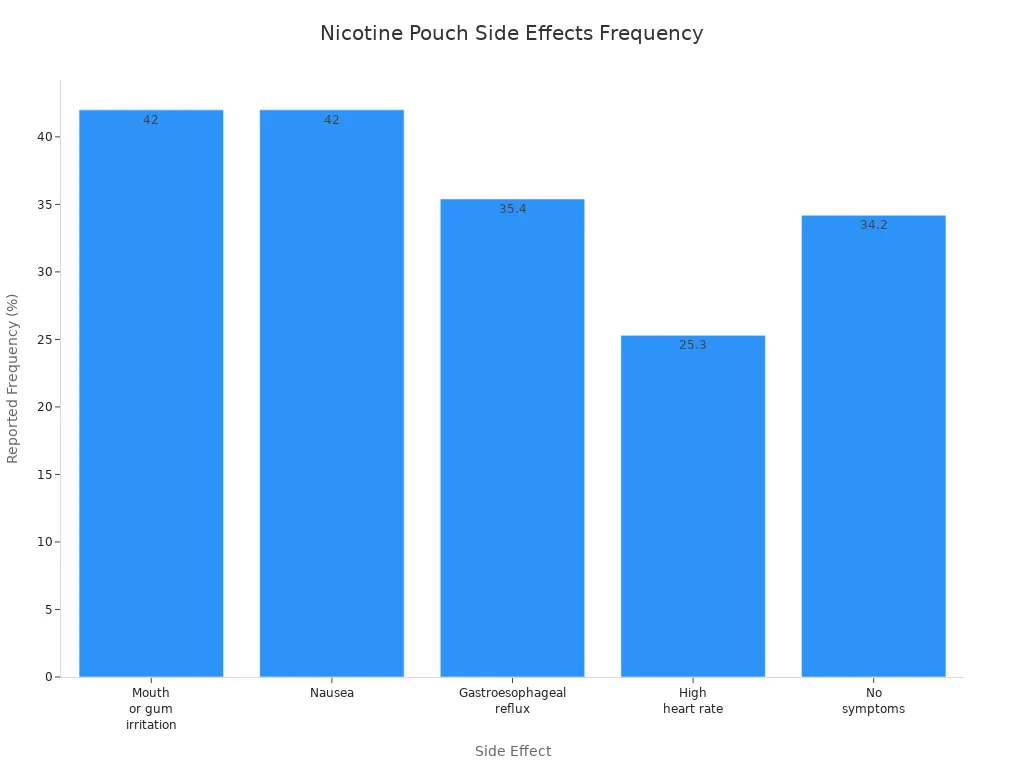
Tip: If you have any side effects that do not go away, stop using nicotine pouches and talk to your doctor. Your health is important.
Nicotine pouch side effects can be mild or serious. You may not get every side effect, but you should watch for changes in your body or mouth. Using nicotine pouches for a long time can raise your risk of health problems, especially if you already have gum disease or sensitive teeth.
Nicotine pouches can change how your heart works. When you use nicotine, your heart beats faster. Your blood pressure goes up quickly. This happens because nicotine makes your body release special chemicals. These chemicals are called norepinephrine and epinephrine. Your heart rate and blood pressure peak in about 5 to 10 minutes. They usually go back to normal after 40 minutes. If you use nicotine a lot, your body gets used to it. But you can still get heart disease. The table below shows how nicotine pouches affect your heart:
Cardiovascular Effect | Description | Time Course | Notes |
|---|---|---|---|
Increased heart rate and blood pressure | Nicotine causes your heart to beat faster and raises blood pressure | Peaks in 5-10 minutes, normal by 40 minutes | Similar to smoking cigarettes |
Tolerance | Your body adapts, but risks stay | Chronic use | May lower blood pressure in smokers |
Vasoconstriction | Blood vessels narrow, reducing blood flow | Immediate | Can affect heart and skin health |
Nicotine pouches can change your brain. If you are young, nicotine can hurt your brain as it grows. You might have trouble paying attention. You may find learning and remembering things harder. Nicotine changes how your brain works. It affects dopamine and brain receptors. This can make you addicted. It can also cause anxiety and depression. Teens have a higher risk because their brains are still growing. Using nicotine pouches for a long time can cause mood swings. It can make it hard to control your actions.
Nicotine can slow down brain growth, especially in memory and decision-making areas.
You can get addicted faster if you start young.
Long-term effects include trouble focusing and higher risk for mental health problems.
If you are pregnant or want to be, nicotine pouches are risky. Nicotine goes through the placenta and reaches the baby. This can cause early birth and low birth weight. It can also cause birth defects. Nicotine can get into breast milk and reach babies after birth. Women who use nicotine may have trouble getting pregnant. Nicotine can change hormones and egg quality. Doctors say you should not use nicotine when pregnant.
Nicotine raises the chance of miscarriage and can hurt the baby’s growth.
Long-term effects on fertility include hormone problems and lower egg quality.
Nicotine can change how your immune system works. It can make your body weaker against sickness. It lowers immune cell activity and makes fewer antibodies. This means you can get sick more easily. It may also raise your risk for cancer. Nicotine can hurt your gums and slow healing in your mouth. Nicotine pouches have fewer bad chemicals than tobacco. But they can still cause health problems over time. Scientists are still learning about all the long-term effects. There may be cancer risks.
Tip: Watch for long-term side effects. Talk to your doctor if you notice changes in your health.

You might wonder how nicotine pouches are different from smoking and vaping. Studies show nicotine pouches have fewer health risks than cigarettes. Cigarettes have chemicals that can cause cancer and hurt your lungs and heart. When you smoke, you breathe in nicotine and many bad chemicals. Vaping gives you nicotine too, but it uses a device to heat up liquid. This makes vapor with less harmful stuff than smoke, but you still get chemicals like metals.
Nicotine pouches give you nicotine through your mouth. This way is slower than breathing it in, so you do not feel a quick rush. You do not hurt your lungs because you do not breathe in smoke or vapor. But nicotine pouches are not totally safe. They can make you addicted and raise your chance of heart problems. Some people think nicotine pouches are easier to use and not as bad, but they can make young people want to try them because of flavors and how easy they are to hide.
Tip: If you want to stop using tobacco, switching to nicotine pouches can lower your risk of cancer-causing chemicals. But you can still get addicted and have health problems.
You may know about smokeless tobacco like snus or moist snuff. These have tobacco leaf and lots of harmful chemicals. Nicotine pouches do not have tobacco leaf, so they have fewer chemicals that cause cancer. The table below shows how they are different:
Aspect | Nicotine Pouches | Smokeless Tobacco (Snus, Moist Snuff) |
|---|---|---|
Harmful Chemicals | Few found, no nitrosamines or PAHs | Many found, including nitrosamines and PAHs |
Manufacturing | No tobacco, heat treated | Has tobacco, fermented or heat treated |
Oral Health Risks | Lower cell damage, not mutagenic | Higher cell damage and can change genes |
Nicotine Delivery | Slower, like snus | Faster, higher chance of addiction |
Nicotine pouches can still hurt your mouth. You might get white spots, sore gums, or swelling. These problems get worse if you use them a lot. Dentists say you should check your mouth often and talk to your dentist if you see changes.
If you want to quit tobacco, there are better ways. Nicotine pouches are not approved by the FDA for quitting. Old nicotine replacement products like patches, gum, and lozenges have been tested for years and are FDA-approved. These help you handle cravings and withdrawal safely. Nicotine pouches might help some people smoke less, but they can be addictive and do not have strong proof they work for quitting.
You should try safer ways to quit tobacco, like using approved products or getting help from a doctor. Experts say you should talk to your doctor before using nicotine pouches or any quitting tool. Quitting nicotine is tough, but support and proven ways can help you more.
Note: Many young people who use nicotine pouches also use other tobacco products. This makes addiction more likely. Pick safer, proven ways if you want to quit.
Using nicotine pouches can hurt your health. You might get mouth sores or gum pain. These products can make you addicted. They can also cause heart problems.
Scientists do not know all the long-term effects yet.
Doctors say young people, pregnant people, and non-smokers should not use nicotine pouches.
Ask your doctor before you use any nicotine product. Watch for new studies about nicotine pouches.
If you swallow a nicotine pouch by accident, you might feel sick or get a stomachache. Most people do not have serious problems. You should drink water and watch for symptoms. Call a doctor if you feel very sick.
Yes, you can get addicted. Nicotine is a strong drug. Your body and brain can start to need it. You may feel cravings or want to use pouches more often.
No, nicotine pouches are not safe for teens. Nicotine can harm your brain as it grows. You may have trouble learning or paying attention. Doctors say teens should not use any nicotine products.
Nicotine pouches do not have tobacco leaf, so they usually do not stain teeth like chewing tobacco. You might still get gum problems or mouth sores. Good dental care helps keep your mouth healthy.


