Welcome to our website! Call Us: +86-18622194621 E-mail: toptac@fancyco.com

Views: 0 Author: Site Editor Publish Time: 2026-03-26 Origin: Site
You can see that clear rolling papers are not like regular ones. They look and feel different, but they are still natural and break down easily.
Clear rolling papers are made from plant-based cellulose. This is a natural material from plants. It looks like plastic but is safe and breaks down in nature. These papers do not have plastic, dyes, or bad chemicals. This makes them a cleaner and more earth-friendly choice. To make them, people take pure cellulose from plants like wood, hemp, or cotton mallow. Then they turn it into thin, see-through sheets. Clear rolling papers burn slowly and evenly. They give a smooth taste and do not add extra flavor to your smoke. They are good for people who want a natural, cool, and earth-friendly rolling paper. But you might need some practice to roll them.
When you ask what is clear rolling paper made of, you find that the answer is plant-based cellulose. This is a natural material that comes from the cell walls of plants. You see cellulose in many plants, but for clear rolling paper, manufacturers use a special process. They extract and purify the cellulose, then turn it into thin, see-through sheets. These sheets look like plastic, but they are not. They do not use dyes or regular pulp. This gives clear rolling paper its unique, glassy look and smooth feel.
Cellulose comes from plants and forms the main part of clear rolling paper.
The process makes the paper clear and film-like, not like regular rolling papers.
You do not find any added colors or thick fibers in clear rolling papers.
You can trust that plant-based cellulose is safe and natural. It does not add strange chemicals to your smoke.
You might wonder where the cellulose in clear rolling paper comes from. The answer is in the plants. Here are the main sources:
Wood pulp: This comes from trees like pine or eucalyptus. It is common and gives clear rolling paper a smooth texture.
Hemp fibers: These come from the stalks of the hemp plant. Hemp is strong, grows back quickly, and is good for the earth.
Asiatic cotton mallow: This plant grows in Brazil and Asia. It makes super-clear sheets and does not use trees.
When you look at what is clear rolling paper made of, you see that these plants help make a product that is both clear and natural. You get a rolling paper that stands out from the rest.
You may notice that clear rolling paper looks like plastic. It is not. You do not find any plastic, petroleum, or synthetic polymers in clear rolling papers. The makers use only plant-based cellulose. This means you get a product that is safe to use and better for the planet.
Tip: If you want a rolling paper that breaks down in nature, clear rolling paper is a smart choice. It is biodegradable and does not leave harmful waste.
When you choose clear rolling papers, you pick a product that is clean, simple, and friendly to the environment. You now know what is clear rolling paper made of and why it is different from other options.
Clear rolling papers are made from plant-based cellulose, a natural material from plant cell walls. It affects both the look and performance of transparent rolling papers.
Natural Plant Origin
Sourced from wood pulp, cotton, or other plant fibers. Renewable and widely available.
Transparent Film Structure
Processed into a smooth, uniform film. No visible fibers, so it appears clear.
Light Transmission
Minimal light scattering. This creates a glass-like, transparent look.
Even Burn Behavior
Dense and consistent structure. Helps achieve a slower, steady burn.
Flexible and Thin
Lightweight but strong. Easy to roll without breaking.
Biodegradable Material
Plant-based and generally biodegradable. Impact depends on processing.
First, plants like wood, hemp, or cotton mallow are used. To get pure cellulose, other plant parts must be taken out. This happens in a few steps:
Alkaline Hydrolysis: The plant material is soaked in sodium hydroxide. This step takes away hemicellulose and lignin. These are not needed for clear rolling papers.
Ethanol Treatment: The fibers are washed with ethanol. This helps remove organic stuff and ashes.
Bleaching: Acidic sodium chlorite is used to bleach the cellulose. This makes it even cleaner and whiter.
Some factories use chemicals like pyridine and chloroform for special cellulose. These chemicals can be bad for people and the earth. Most of the time, the process gives very pure cellulose. Sometimes, a little hemicellulose or lignin is left.
Note: The main goal is to get cellulose as pure as possible. This keeps clear rolling papers safe and clean.
After getting pure cellulose, it is turned into thin, clear sheets. The cellulose is dissolved in a special liquid. Then, it is spread out in a thin layer and dried. This makes a smooth, glassy film. The film is cut into the right size for rolling papers.
The sheets look like plastic but are made from plants.
No dyes or thick fibers are added during the process.
The paper is strong, bends easily, and is clear.
Traditional rolling papers use plant fibers like hemp or rice. Factories press these fibers together to make thin, solid sheets. They do not use the same chemical steps as clear rolling papers. This makes the paper look and feel different.
Feature | Clear Rolling Papers | Traditional Rolling Papers |
|---|---|---|
Main Material | Pure cellulose | Plant fibers |
Appearance | Transparent | Opaque |
Chemical Processing | More steps | Fewer steps |
Environmental Impact | Biodegradable | Biodegradable |
You can see that clear rolling papers need more steps to look special. The process makes them different from regular rolling papers.
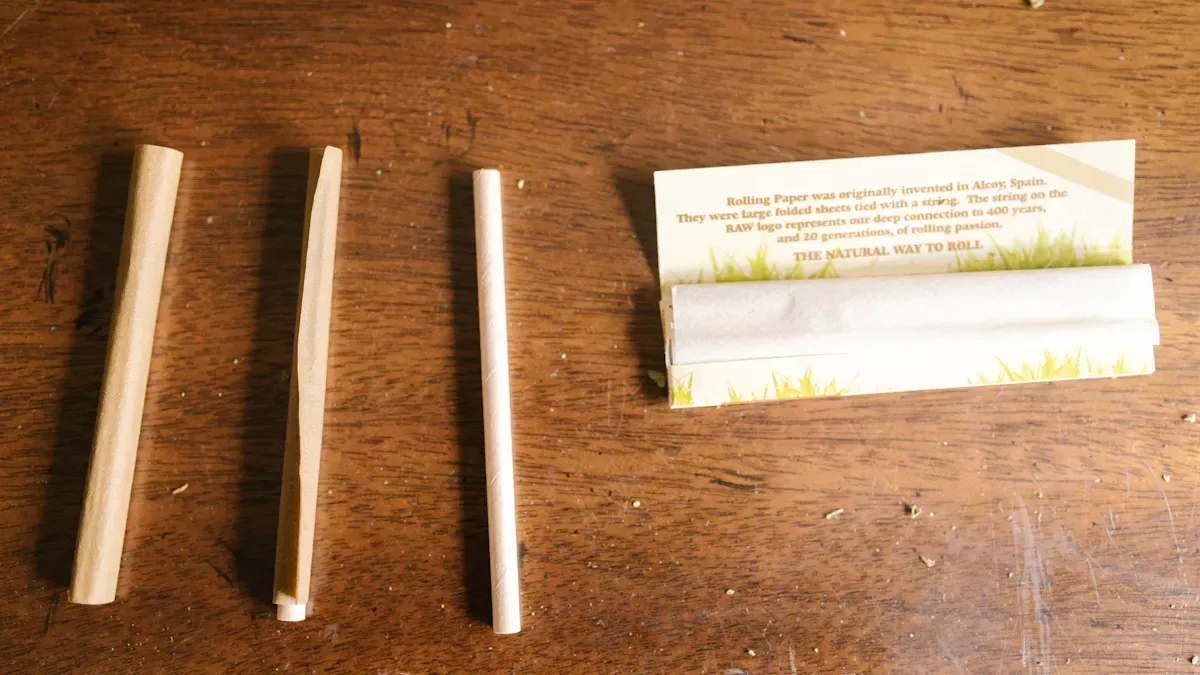
You might ask what rolling papers are made from. Regular rolling papers use plants like rice, hemp, flax, or wood pulp. Each plant gives the paper a different feel and burn. Clear rolling papers use cellulose from plants. This makes them smooth and see-through.
Here is a table that lists the main materials and their features:
Material | Characteristics |
|---|---|
Rice | Light, burns slowly, has no taste, and is seen as healthy. |
Hemp | Natural, pure, easy to roll, burns slowly, and keeps things clean. |
Flax | Thin, pure, easy to roll, makes less smoke for a healthier use. |
Wood Pulp | Burns fast, can hurt the environment, and is often bleached with strong chemicals. |
Clear | Made from biodegradable cellophane, has glycerine that can release bad stuff when burned. |
You can see that regular papers often use rice, hemp, or flax. These burn slowly and do not change the taste. Wood pulp burns fast and can be bad for nature. Clear rolling papers are different because they use cellulose and do not add extra chemicals.
Here is another table that shows the additives in each type:
Type of Rolling Paper | Additives/ Chemicals Found |
|---|---|
Traditional Rolling Papers | Calcium carbonate, Potassium citrate |
Clear Rolling Papers | None (made from cellulose) |
You can notice that regular papers may have some chemicals. These help the paper burn or stick together. Clear rolling papers do not use these chemicals.
Each paper burns in its own way. Rice and hemp papers burn slowly. Flax papers make less smoke. Wood pulp burns fast and can taste strong. Clear rolling papers burn evenly. They do not change the flavor much. You can see your herbs inside, which looks cool.
Tip: For a smooth and clean smoke, try papers made from rice, hemp, or clear cellulose.
You help the earth when you pick the right paper. Rice, hemp, and flax papers break down in nature. Wood pulp is bad for the planet because it is bleached with harsh chemicals. Clear rolling papers use plant cellulose and do not leave waste. You avoid extra chemicals and help keep the earth clean.
Now you know what rolling papers are made of and how clear rolling papers are different. You can choose the best one for you and the planet.
Clear rolling papers may share the same core material (plant-based cellulose), but they come in different formats, sizes, and styles to meet various user needs.
By Size (Standard / King Size / Slim)
Available in multiple sizes. King size and slim formats are the most common for longer or more refined rolls.
Pre-Cut Sheets vs Rolls
Pre-cut sheets are ready to use, while rolls allow users to customize length and size based on preference.
Pre-Rolled Cones
Ready-made cone shapes. Ideal for convenience and consistent filling, especially for beginners.
Colored or Tinted Clear Papers
Slightly tinted versions (e.g., blue, pink, or flavored). Designed more for visual appeal and branding.
Flavored Clear Rolling Papers
Infused with subtle flavors. Adds a different sensory experience compared to neutral cellulose papers.
Custom Printed Clear Papers
Designed for branding or private label use. Logos or patterns can be printed on transparent material for a premium look.
Specialty / Novelty Types
Includes ultra-clear, extra-thick, or decorative options. Often used for display, gifting, or niche markets.
Clear rolling papers have many good points. Here are some of the main ones:
You do not get harmful chemicals or extra stuff found in regular papers.
These papers help the earth because they come from plants that need less spray and plant food.
They burn slowly and evenly, so you taste your herbs or tobacco without extra paper flavor.
The see-through look lets you see your mix, which many people think is cool and different.
The table below shows how clear rolling papers and regular papers look and smoke:
Feature | Clear Rolling Papers | Traditional Papers |
|---|---|---|
Visual Appeal | See-through, shows your mix | Not clear, hides what’s inside |
Aesthetic | Modern and stands out | Usual look |
Burning Characteristics | Burns slow and steady | Might burn unevenly |
Flavor Profile | Cleaner taste, less paper flavor | Can add taste to smoke |
There are some things to think about before using clear rolling papers:
These papers can be tricky to roll because they are smooth and thin. You might need to practice a bit.
Some people find that clear papers rip more easily if you press too hard.
If you want no taste at all, you may notice a slight flavor, but it is less than most regular papers.
Not every clear rolling paper is the same. Always read the label to make sure you get natural, chemical-free ones.
Tip: If you care about health, pick papers made from natural stuff and skip those with added chemicals.
Clear rolling papers are best for some people and needs:
You might like them if you want a cleaner and more natural smoke.
They are great if you care about the earth and want something that breaks down fast.
Many people who roll their own tobacco or cannabis like the modern look and slow burn.
If you want to show your mix or try something new, these papers can make your session special.
You can see that clear rolling papers are good for people who want quality, style, and a safer choice for themselves and the earth.
You have learned that clear rolling papers are made from plant-based cellulose. They look see-through and different from other papers. These papers do not use bleach or bad chemicals. This helps you make safer choices for yourself and the earth. Some rolling papers can add harmful things to your smoke. That is why it is important to pick the right kind.
New trends show papers are getting thinner and stronger. There are also better ways to store them.
Experts say you should pick natural and earth-friendly papers for your health and the planet.
Think about what you want and what matters to you before picking your next rolling paper.
You can feel safe using clear rolling papers. They come from plant cellulose and do not have plastic or harsh chemicals. Always check the label to make sure you get natural, chemical-free papers.
Clear rolling papers have almost no flavor. You taste your herbs or tobacco, not the paper. Some people notice a very slight taste, but it is less than most regular papers.
Yes, you can use clear rolling papers with any legal herb or tobacco. They work just like regular rolling papers. You may need to practice rolling because they feel smoother and thinner.
Tip: Keep your clear rolling papers in a cool, dry place.
Moisture can make them stick together or tear. Use the original package or a small airtight container for best results.


